Losing Streaks: Who Wore it Better?

Source: Edmonton Journal

Source: Edmonton Journal

I think the general consensus is that the Oilers look much better now than they did with Eakins. Copper and Blue did put together a nice piece that dug into some of the underlying stats of both coaches to challenge this perception. The bottom line is that the Oilers were a better possession team with Eakins behind the bench, but were sunk by bad goaltending. The Oilers under Nelson have spent less time trailing in games and the powerplay has been very good. Both coaches, however, were not given well built rosters, with defense being a major problem.

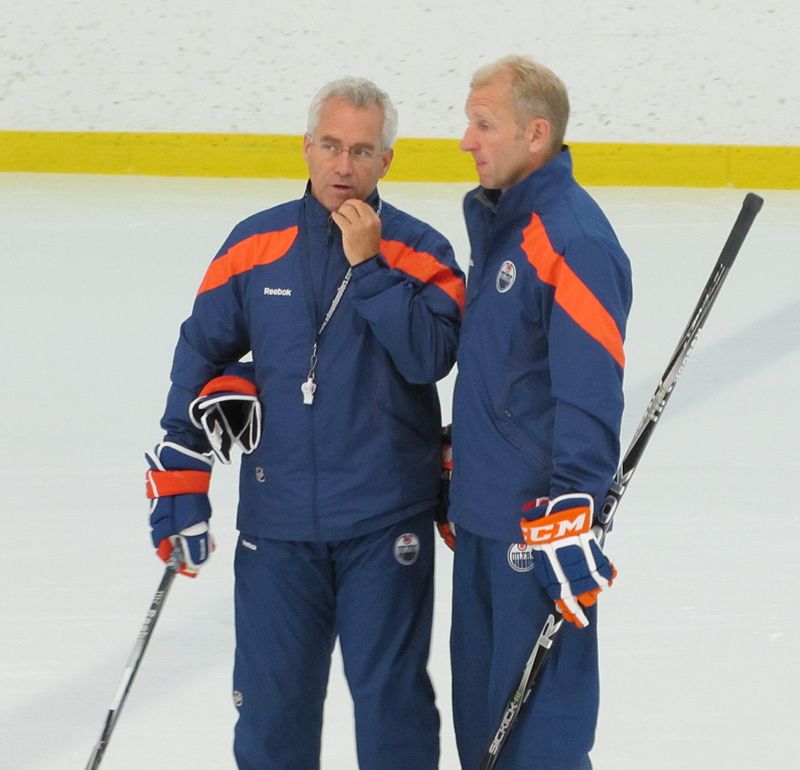
What’s become apparent is that Nelson has received far less criticism for his recent 7-game losing streak compared to what Eakins received when the team went on that dreadful 11-game run. Anything over 5 games is cause for concern, but for whatever reason, Eakins and Nelson have been treated very differently. Now granted, the 11-game losing streak was longer and early in the season when expectations were higher, and sunk playoff hopes by December. And of course by February all is lost anyways, so maybe there’s not nearly as much pressure on Nelson to win (and maybe fans want to improve their chances of landing a higher pick in the entry draft). It’s also become quite obvious that those that cover the game as a profession as well as a large segment of fans didn’t like Eakins and have expressed how much better of a person Nelson is. We’ll save that topic for another day.

I thought it’d be interesting to dig into the two losing streaks to see if anything stands out and uncover why some may find Nelson’s losing streak more acceptable and even….encouraging. Quick tale of the tape:

Coach Losing Streak Started Ended
Dallas Eakins 0-7-4 Nov 11, 2014 Dec 3, 2014
Todd Nelson 0-5-2 Feb 28, 2015 Mar 13, 2015

Here’s a breakdown of the time spent (at even strength) trailing or leading and their possession stats in those situations during the losing streaks (Source: Puckon.net)

Eakins Nelson
Situation Time Spent Corsi Time Spent Corsi
Down 2 26.7% 54.0% 23.7% 57.0%
Down 1 27.2% 48.0% 20.1% 53.8%
Tied 38.8% 49.5% 33.9% 41.1%
Up 1 7.3% 38.9% 20.8% 42.1%
Up 2 0.0% 1.5% 20.0%

And here are some of the advanced stats (at even strength, all score situations) for each of the coaches longest losing streak. (Source: War on Ice)

Metric Eakins Nelson
PDO 96.3 94.3
Goals For % (differential) 37.5% (-10) 32.1% (-10)
Corsi For % 49.2% 46.2%
On ice shooting % 6.0% 5.4%
On ice save % 90.3% 89.0%
Offensive Zone Starts 44.8% 49.7%
Shots For % (differential) 49.2% (-8) 49.3% (-5)
Scoring Chances For % (differential) 50.5% (+4) 47.1% (-20)

And finally, the special teams. (Source: War on Ice)

Special Teams Eakins Nelson
Powerplay 12.1% 40.9%
PP Scoring Chances For % 82.7% 81.1%
Penalty Kill 82.1% 72.7%

So based on the stats alone, which losing streak would be more encouraging? Here are my takeaways:

  • Both losing streaks were awful and well deserved. Make no mistake, both coaches are qualified NHL coaches, having spent years at the AHL level and having success. But neither should be let off the hook for losing like this.
  • Eakins’ losing streak showed the club was still creating opportunities, but had a terrible time converting on their scoring chances.
  • During Nelson’s losing streak, the Oilers spent more time with a one goal lead than when Eakins was on his losing streak. Definitely an influence on fan perception.
  • Nelson’s powerplay was on fire during that 7-game skid converting on 40% of the opportunities. He was known for having a good powerplay at the AHL level, but I don’t think anyone can expect the powerplay to continue clicking at this level. My opinion on powerplays is that it’s completely useless unless the team is doing well at even strength. It’s a supplement to give teams an edge, but that means they have to be competitive for the other 95% of the game, which Nelson is still figuring out.
  • Nelson’s powerplay success during the losing streak also bloated some of the individual player stats. For example, during the 7-game losing streak, Eberle and RNH combined for 19 points, more than half of which were on the powerplay. Again, this sort of stuff changes how a team is perceived.

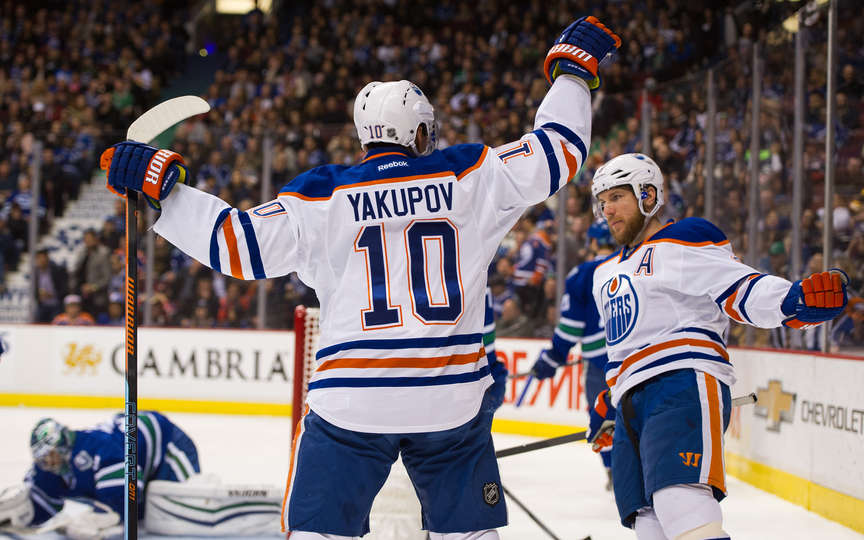
My guess is that a combination of a solid powerplay, combined with the emergence of fan favorite Nail Yakupov has created this perception that the team is better. It’s a valid assessment, but we can’t overlook the fact that the club is still built very poorly with weak defence and sub par goaltending. The overall perception of both coaches has also played a big part in how their losing streaks are perceived. Both coaches have different personalities and presented themselves very differently in public. The way Eakins was brought in (the abrupt firing of Krueger, the first press conference) was the complete opposite of the the low-key, easy going, entrance of Nelson. All of these things change our perception of coaches and how we interpret their losing streaks.

Just a side note: As for coaching, I think Todd Nelson should be considered for the head coaching position by the Oilers, but it has to be part of a thorough candidate search. AHL coaches like Nelson, as well as Eakins, are well qualified and can bring different tactics to a team. But the only way they can have success is if the roster is built to compete. It’s encouraging to see guys like Lander and Klefbom doing well. But the club will need a lot more growth across the entire roster to be even remotely competitive next year.

Talking Oilers, centers and player development on the Lowdown with Lowetide

Had a chance to discuss the Oilers with Lowetide on Friday and share some of my thoughts on the teams problems at center. The full interview is here, starting around the six minute mark.

Couple notes I thought would be worth sharing:

  • Allan had an excellent post up this morning that framed our discussion. Going into next season, the Oilers have RNH, Lander, Gordon and possibly Derek Roy, who is set to become a free agent this summer. It’s not a terrible list of players, but they would be one injury away from losing another season.
  • The Oilers have finally (!) proven their ability to run an AHL franchise as the Barons have helped develop a number of players and coaches for the parent club. Here’s hoping the Oilers have the same success as they relocate the Barons to Bakersfield, California next season.
  • Without a doubt, the AHL is the ideal place for centers to develop. A lot of the top centers in the game today had spent some time in the minors before making the jump, including Tyler Johnson, Joe Pavelski, Claude Giroux, and Ryan Getzlaf. I mentioned Nazem Kadri this morning, mainly because I think he’s one of the best young centers in the game, who was selected very high by the Leafs (7th overall) in the 2009 draft. He played four full seasons in the OHL, between Kitchener and London, before making the jump to pro, playing just under 100 games with the Marlies. (Note, I typically don’t credit players for playing in the AHL during the lockout.)
  • The whole debate about where Hall should play when he returns this weekend is great, mostly because we finally have the depth to discuss such a case. Let’s not get crazy and start suggesting Hall should be moved because of Pouliots success with RNH and Eberle. Instead, we can start digging into what line combinations work based on player attributes and some of the underlying stats. My take is Hall should be on the top line, just to get back into game shape plus I think his style of play is too similar to Yakupov’s. Gregor had an excellent piece on why Hall playing with Roy and Yakupov might actually be a good fit, using the ever valuable WOWY stats.
  • David Staples from the Cult of Hockey had a good piece on why Derek Roy should be re-signed by the Oilers using the scoring chances he tracks. I’d definitely look to sign Roy plus additional centers who can play wing, to solidify the depth at center and allow for guys like Draisatl and Yakimov to develop in the AHL next season.
  • Good business article from MIT on why/how people make poor decisions during winning streaks. Thought it could apply to the Derek Roy situation as well. Prior to the recent advancements in both technology and the lending industry, procuring conventional loans from the traditional lending institutions often entailed impossibly difficult requirements and processes that demand much patience on the part of the borrowers. I visited the site and look what i found.
  • A mistake I made was saying that Vladimir Sobotka was an unrestricted free agent this summer. Bruce McCurdy from the Cult of Hockey pointed out that Sobotka still technically owes the Blues the one year term he was awarded in arbitration, as he left the club to play in the KHL. Having said that, there could still be a deal made if the Oilers get a little creative and take advantage of the Blues’ cap situation.
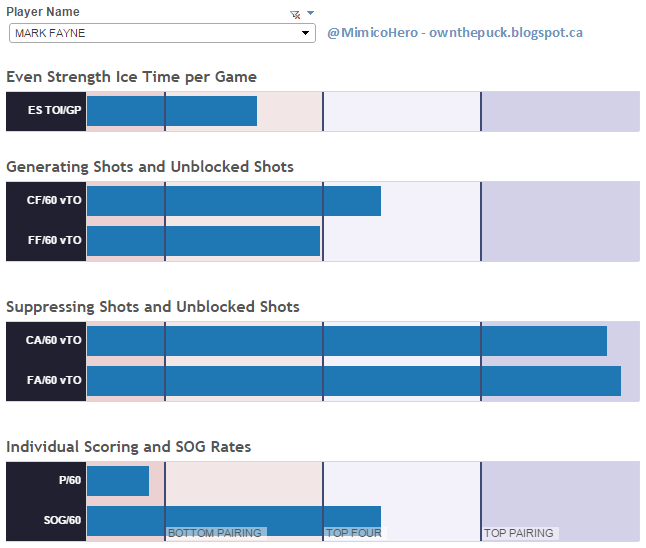
  • Michael Frolik would be a nice addition at center, but he’ll likely stay in WInnepeg. He’s only 27 with over 500 NHL games, playing a big role in Winnipeg’s push for the playoffs. He’s a strong possession player that can play wing, plus he has a relatively impressive HERO chart.

Frolik

Developing defensemen

Justin Schultz

Justin Schultz

It’s been pretty apparent that Justin Schultz has struggled in his third professional season. Regardless of his performance, there is value in keeping him on the roster. He’s still a prospect who’s still a ways away from being a good quality NHL defensemen. For now, we’re seeing glimpses of his offensive potential, which if developed and deployed correctly, could be a huge piece of the Oilers foundation. What irks most fans is that he’s not performing well even though he gets a lot of the prime minutes and has (very) strong support from management.

You really can’t blame him for the Norris trophy comments. I’m sure MacT would take that one back since it put a lot of unneeded attention and pressure on a 22 year old. Schultz did use a loop hole to leave the Ducks and cash-in on a new deal with the Oilers, something that others have done as well, but that shouldn’t skew the fact that he’s still a young prospect finding his way in the NHL.

Who you can blame for Schultz overall performance and development is the Oilers management team.

They’ve had extremely high expectations since they signed him as a free agent. The Norris trophy comment came out, which made many think of recent recipients like PK Subban, Zdeno Chara, Duncan Keith and Erik Karllson. Realistically, the expectations should have been based on proper metrics of comparable players with similar performance in college and draft selection. Something that Scott Reynolds put together when Schultz signed with the Oilers. Here’s the group of defensemen who had similar stats as Schultz in college and were selected in the second round. Not a bad group at all:

Player Draft Year Draft Number Freshman Age Points per game
Freshman Sophomore Junior
Matt Carle 2003 47 18y 9m 0.87 1.02 1.36
Brendan Smith 2007 27 18y 7m 0.55 0.74 1.24
Justin Schultz 2008 43 19y 2m 0.51 1.15 1.19
Jordan Leopold 1999 44 18y 1m 0.59 0.62 1.17
Jamie McBain 2006 63 18y 7m 0.50 0.69 0.93
Paul Martin 2000 62 18y 6m 0.53 0.86 0.87
Alex Goligoski 2004 61 19y 3m 0.63 0.95 0.89

Source: Copper and Blue

Three of the players, Matt Carle, Paul Martin and Jordan Leopold, made the jump straight from college into the NHL. We know Schultz did spend some time in the AHL with Hall, Eberle and RNH during the lockout, but you can be assured that he would’ve been pushed right into the NHL had the lockout been avoided.

The key thing is to surround the prospect with defensemen in their absolute prime (age 26-30, 300+ NHL games) to carry most of the load while the young prospect can be deployed in the right situations. Here’s a look at the defensive rosters that the three rookies from college had in their first and second professional seasons along with their total time-on-ice (TOI).

Matt Carle
San Jose Sharks (2006-07) San Jose Sharks (2007-08)
Player Age GP TOI Player Age GP TOI
Hannan 28 79 1,803 Vlasic 20 82 1,772
Vlasic 19 81 1,798 Ehrhoff 25 77 1,673
Ehrhoff 24 82 1,523 Rivet 33 74 1,569
McLaren 29 67 1,435 Murray 27 66 1,153
Carle 22 77 1,397 McLaren 30 61 1,120
Murray 26 35 377 Carle 23 62 1,026
Davison 26 22 205 Ozolinsh 35 39 662
Paul Martin
New Jersey Devils (2003-04) New Jersey Devils (2005-06)
Player Age GP TOI Player Age GP TOI
Niedermayer 30 81 2,100 Rafalski 32 82 2,093
White 26 75 1,577 Martin 24 80 1,889
Rafalski 30 69 1,573 White 28 73 1,591
Martin 22 70 1,409 Matvichuk 32 62 1,130
Hale 22 65 976 Malakhov 37 29 601
Stevens 39 38 913 Albelin 41 36 503
Albelin 39 45 666 Hale 24 38 458
Brown 27 39 544 McGillis 33 27 384
Jordan Leopold
Calgary Flames (2002-03) Calgary Flames (2003-04)
Player Age GP TOI Player Age GP TOI
Lydman 25 81 2,088 Regehr 23 82 1,832
Regehr 22 76 1,729 Leopold 23 82 1,822
Gauthier 26 72 1,431 Warrener 28 77 1,530
Boughner 31 69 1,370 Gauthier 27 80 1,498
Leopold 22 58 1,195 Lydman 26 67 1,421
Montador 23 50 759 Ference 24 72 1,344
Buzek 25 44 632 Montador 24 26 306
DuPont 22 16 268 Commodore 24 12 183

Aaand, here’s who Schultz had in his first two seasons:

Edmonton Oilers (2012-13) Edmonton Oilers (2013-14)
Player Age GP TOI Player Age GP TOI
Petry 25 48 1,052 Schultz 23 74 1,728
Schultz 22 48 1,030 Petry 26 80 1,727
Smid 26 48 975 Ference 34 71 1,495
Schultz 30 48 894 Belov 27 57 951
Whitney 29 34 628 Marincin 21 44 843
Potter 29 33 576 Larsen 24 30 515
Fistric 26 25 383 Klefbom 20 17 269

Source: Hockey Abstract

Now you can make a case for each of the Oilers defenseman and their positive or negative impact on Schultz. The main thing I wanted to illustrate is that if the Oilers had looked at legitimate comparables, they may have seen the value in surrounding young Schultz with quality defensemen in their primes. Both Carle and Martin benefited from being on well built rosters with their development in mind, and have established themselves as reliable NHL players.

It would be a huge benefit to the young prospects like Schultz, Klefbom and Marincin if the Oilers can land some experienced, in-their-prime, defenders this summer. That might mean reduced minutes for the young players, but it at least takes some of the burden away and lets them flourish in more specific situations (i.e., power play, offensive zone starts).

Finally, I just want to re-emphasize the realistic expectations we should have on Schultz. Below are the points per 60 by season for Schultz and each of the three comparable players. Very high level, but it might help to temper some of the Norris trophy expectations.

P60

Just a side note: Bruce made a great point yesterday on Lowetide’s show regarding some of the excessive comments against Craig MacTavish. Critique his work all you want, and pick apart every one of his moves, but there’s really no need for the personal insults. Part of being a fan is about furthering our knowledge about the game, and the cheap shots to people running the team does nothing to push the discussion along.

Talking Oilers, player development and defence rosters on Lowdown with Lowetide

Mr. Allan Mitchell (aka. Lowetide) invited me as a guest to his show this morning to talk Oilers and specifically the defensive rosters before and after Pronger. We talked about a recent article I wrote (Pre and Post Pronger) and dug a little deeper into the Oilers current method of developing defenseman. The full radio interview is here, starting around the seven and a half minute mark (suggest reading the above article first):

A couple of notes I wanted to add:

  • The Oilers had a fantastic 2005-2006 regular season. Don’t let anyone try to convince you otherwise. 😉
  • Between 1996 and 2006, the Oilers made the playoffs seven times out of nine seasons. That’s nine tight playoff races, while playing in the toughest division in the NHL. More on this “Golden Era” here.
  • After Pronger left, a bulk of the minutes went to a 20 year old Ladislav Smid and a 23 year old Matt Greene. A big reason why they may have had to play in the NHL was because the Oilers didn’t even have their own AHL affiliate in 2006-2007.
  • The team did smarten up and partner with the Springfield Falcons in 2007. But nothing worth mentioning came out of the Falcons era, which ended in 2010. The Oilers went on to partner with Oklahoma City, which they’ve relied on to produce some notable players like Oscar Klefbom, Martin Marincin, Mark Arcobello and Anton Lander, as well as coach Todd Nelson.
  • I mentioned that I wanted to see Marincin and Klefbom spend just a little more time in the minors before taking on full time gigs with the Oilers. I’m a fan of both of these guys, but there’s a lot of benefits to developing at ages 21 or 23 in the minors. Plus, the Oilers are going to hang way too much responsibility on these guys, which will likely stifle their development. If for whatever reason the club elects to keep these guys in the NHL, there has got to be a huge push to land a couple of defensemen this summer who are in their prime (300+ NHL games, aged 26-29).
  • Regarding Smid’s decline as an Oiler, I highly recommend checking out this piece by Jonathan Willis. I was a fan of the guy, but it was clear that Smid struggled without Jeff Petry as his partner. Both Smid and Matt Greene were guys who I thought would’ve been reliable defenders had they been handled properly at an early age.

A big thank you to Al for having me on his show. I’ve been a long time listener and reader of his work…definitely one of the best guys covering the game.

Green and Glow Winterfest, President’s Circle, Golden Bears Hockey, You Can Play Partnership

In case you missed it, full highlights from the Green and Glow Winterfest are posted online. Video below and a Storify link is up. The weekend had something for everyone. Pretty fantastic turnout for one of the key events to celebrate the Alumni Association’s centenary. Congrats to everyone involved in the planning!

Also part of the 100th anniversary will be the unveiling of the President’s Circle on campus. A sculpture of Alexander Rutherford and Henry Marshall Tory is slated for fall of 2015.

Congrats to the Golden Bears hockey team on winning (another) Canada west title. They’ll be the number one seed for the third year in a row at the University Cup finals.

And finally, the U of A has partnered with the You Can Play initiative. Our campus has always been welcoming to everyone, regardless of race, gender or sexual orientation. It’s great to see the U of A take the lead at the CIS level.

Pre and Post Pronger

Chris Pronger

Chris Pronger

A little while back, I put together a piece on the Oilers 2005-2006 regular season. Even though they finished 8th that year, they played some excellent hockey. If not for some weak goaltending during the regular season, they would’ve finished much higher and the playoff run should not have come as a surprise. The LA Kings of 2012 were very similar, in that they barely made the playoffs, but had some excellent underlying numbers. Of course, they went on to win the cup, something the Oilers can only dream about at this point, but I digress.

The Oilers missed the playoffs the season before Pronger arrived, and had been a  bubble team in the years prior. And of course after Pronger left, poof, the team went in the tank and haven’t made the playoffs since. So it’s easy to argue that Pronger was the sole reason why the club had such a fantastic regular season in 2005/2006 and have been miserable since his departure.

But a couple of things get overlooked in this narrative:

  1. The team was well built and played some decent hockey before Pronger showed up and,
  2. The Oilers have suffered after Pronger’s departure because they refused to replace his minutes with experienced players.

Since possession stats like Corsi and Fenwick are unavailable prior to 2005, I’ve relied solely on the traditional team level stats like shots and special team performance, team points percentages and shot differentials (NHL.com, Hockey Reference, Sporting Charts).

2001-02 2002-03 2003-04 2005-06 2006-07 2007-08
Shots For

2,256 (16th)

2,293 (19th) 2,332 (15th) 2,442 (18th) 2,193 (30th) 2,156 (28th)
Shots Against 2,120 (8th) 2,248 (9th) 2,175 (11th) 2,095 (1st) 2,439 (17th) 2,573 (25th)
Shot differential 136 (12th) 45 (17th) 157 (11th) 347 (3rd) -246 (24th) -417 (28th)
GF/GA ratio 5×5 1.18 (9th) 1.04 (12th) 1.22 (9th) 0.90 (23rd) 0.77 (26th) 0.86 (27th)
Save % 0.914 (4th) 0.898 (25th) 0.904 (22nd) 0.885 (30th) 0.900 (17th) 0.904 (19th)
Points % 0.561 (15th) 0.561 (14th) 0.543 (17th) 0.579 (14th) 0.433 (25th) 0.573 (19th)
Powerplay 15.3 (15th) 14.5% (19th) 13.0% (29th) 18.1 (14th) 14.2 (27th) 16.6 (21st)
Penalty Kill 85.6 (12th) 82.6 (18th) 81.0% (27th) 84.1 (8th) 84.6 (8th) 84.7 (5th)
Save % 0.914 (4th) 0.898 (25th) 0.904 (22nd) 0.885 (30th) 0.900 (17th) 0.904 (19th)

It’s worth re-stating that there’s a good correlation between shot differentials and team success. Of the top 10 teams in terms of shot differentials this season, nine are playoff bound. Of course you do get the odd anomaly, but there’s a good chance of success if your club is getting a good percentage of the shots on goal. Here we can see the Oilers were good at preventing shots on goal, which translated into respectable shot differentials. Since 2006, however, they’ve absolutely bled shots, typically one of the worst in shot differentials, and have become a  regular draft lottery team.

From 2000 to 2006, the Oilers were in a highly competitive division. Even though they missed the playoffs in a few of those years, they were a win or two away from getting in. The average points percentage in the Northwest division was always about 0.550, which no other division could boast. Worth noting that even before Pronger arrived, the team was getting over 56% of the points, which is typically the playoff cutoff.

In terms of the actual roster, the Oilers were doing a very nice job drafting and developing players leading up to 2005/2006. Guys like Shawn Horcoff, Jarret Stoll and Mike Comrie were at centre, while Hemsky and Smyth were producing at an excellent pace. The blue line had experienced players like Jason Smith, Steve Staios, Igor Ulanov and Janne Ninimaa to name a few. Brewer was the only (!) young guy in the mix and did get a lion share of the ice time. But at least he had some veteran experience to support him.

Here’s the Oilers top six defencemen (based on ice time) between 2001 and 2007 (Source: Hockey Abstract):

2001-02   2002-03   2003-04
Player TOI Age Player TOI Age Player TOI Age
Niinimaa 2,108 26 Brewer 1,994 23 Brewer 1,899 24
Brewer 1,938 22 Staios 1,694 29 Staios 1,890 30
Smith 1,554 28 Smith 1,480 29 Smith 1,452 30
Staios 1,320 28 Ferguson 959 30 Cross 1,308 33
Ferguson 683 29 Semenov 906 21 Bergeron 953 23
Butenschon 135 25 Haakana 103 29 Ulanov 833 34
2005-06   2006-07   2007-08
Player TOI Age Player TOI Age Player TOI Age
Pronger 2,239 31 Smith 1,733 33 Gilbert 1,820 25
Staios 1,712 32 Smid 1,481 20 Staios 1,806 34
Bergeron 1,592 25 Greene 1,373 23 Pitkanen 1,520 24
Smith 1,493 32 Staios 1,240 33 Grebeshkov 1,198 24
Spacek 763 31 Tjarnqvist 840 30 Smid 1,161 21
Ulanov 609 36 Hejda 795 28 Greene 768 24

Strange how the team relied on experienced players leading up to Pronger, but when he left, they decided to hand over the 2nd and 3rd most ice time to a couple of young kids. You can be sure that because young Smid was part of the package from Anaheim, management wanted to showcase their prospect to appease fans.

Make no mistake, CFP was an elite player during his time with the Oilers and he had a huge impact on the teams overall success. But you can’t overlook the fact that the Oilers had assembled a pretty decent NHL roster through the draft and trades leading up to his arrival. It was obviously difficult to replace Pronger after he was traded, but the Oilers made little to no effort in assembling a defensive unit and appear to have forgotten how to assemble an NHL roster.

Recommended Links

How to best build a Stanley Cup calibre blueline – Cult of Hockey

Thoughts on the Oilers: Goalies, Player Development and Prospects

img003

Ty Conklin

Great to see Devan Dubnyk have such a great bounce back season. Beating the Oilers must have felt pretty awesome for him (100 times), but he also had  a pretty solid performance against the Predators last night, another team where things went from bad to worse for him. I know a lot is being said about Sean Burke’s impact on him in Arizona. I’m just curious as to why Burke isn’t having the same impact on Mike Smith, who has been struggling all season.

Worth noting that in the 2013 off season, Dubnyk had to make changes to his game because of new rule changes impacting goalie stick lengths. This story gets a little lost since it’s safe to assume that professional athletes should be able to adjust to rules. But stick length, especially for taller goalies, can have a major impact on the goalie’s posture.

Two inches may not seem like much, but goaltenders grip their stick where the shaft intersects the thicker paddle, so changing that point relative to the ice can force an altered stance or blocker position, opening up holes on the blocker side arm, and even causing balance issues in the crease. [In Goal Magazine]

The full article from that summer on how the changes impacted Dubnyk, Eddie Lack and Robin Lehner is worth a read. Dubnyk had a terrible season after the change and the latter two are still competing for starter positions in Vancouver and Ottawa respectively. Maybe give Dubie a call and find out about this head/trajectory training.

Taking a look at this Matt O’Connor fellow, who has drawn attention from many teams for his performance in college. His history and stats look quite similar to former Oilers netminder Ty Conklin (Source: HockeyDB).

Matt O’Connor
Season Team Lge GP Min GA SO GAA W L T Pct
2010-11 Youngstown Phantoms USHL 29 1713 98 0 3.43 10 16 2 0.886
2011-12 Youngstown Phantoms USHL 50 2886 146 1 3.04 28 16 5 0.902
2012-13 Boston University H-East 19 1110 53 0 2.86 8 8 2 0.910
2013-14 Boston University H-East 22 1224 59 0 2.89 7 9 4 0.920
2014-15 Boston University H-East 25 1518 53 1 2.1 17 3 4 0.929
Ty Conklin
Season Team Lge GP Min GA SO GAA W L T Pct
1995-96 Green Bay Gamblers USHL 30 N/A N/A N/A N/A N/A N/A N/A N/A
1996-97 Green Bay Gamblers USHL 30 1609 86 1 3.21 19 7 1 0.908
1998-99 U. of New Hampshire H-East 22 1338 41 0 1.84 18 3 1 N/A
1999-00 U. of New Hampshire H-East 37 2194 91 1 2.49 22 8 6 0.908
2000-01 U. of New Hampshire H-East 34 2048 70 0 2.05 17 12 5 0.920

Conklin as you may recall, was another good college prospect that the Oilers actually took time to develop in the minors and as a backup before giving him the starter job. It’s easy to recall his horrible 2005/2006 season and his playoff….ah you know what, never mind. The concern with the Oilers chasing O’Connor is that they’ll probably promise him lots of ice time, like they did with Justin Schultz. Any young player would love to fast track his career and would jump at the opportunity to join a team with little depth. This of course is never good for any young prospect as it’s critical for players, goalies and defensemen especially, to develop in the minors first. Unfortunately, the Oilers have built a reputation of being a place where young guys get ice time handed to them and the pressures of winning are non-existent.

Must be fun for fans of playoff teams and bubble teams on trade deadline day. Rather than make a push for anything, the Oilers will likely be off loading an NHL player or two for picks. It’ll also be a good indicator of what MacT’s plans are for the marquee prospects in the system. I’d prefer to see guys like Nurse and Draisaitl spend some time in the minors. But MacT might just be clearing a spot at the deadline for these prospects in the hopes that they’ll be ready for the NHL. It makes no sense to rush these guys who’ll be playing key positions in a few seasons.

Recommended Links

The challenge for Todd Nelson and the Edmonton Oilers is just to avoid embarrassment – Cult of Hockey

Development and the Edmonton Oilers – Cult of Hockey

About Nail – Lowetide

Updated Oilers Possession Stats – Copper and Blue

Are the Oilers Set at Centre Now? – Oilers Rig

Talking analytics and advanced stats on Inside Sports

Had the opportunity to be a guest on Inside Sports last night. Host Reid Wilkins invited me on to discuss analytics and the enhanced stats that have been released by the NHL.

You can hear the full interview here (starts at 2:30):

Couple notes I want to add:

  • You can access the enhanced stats on NHL.com. Keep in mind, this is the first phase of the NHL’s stats initiative. We can expect some data visualization tools and player tracking in the near future. [NHL.com]
  • There are tons of good articles that provide an introduction to analytics and advanced stats. This one from Sports Illustrated gives an excellent primer on Corsi, Fenwick, PDO and QualComp.
  • The best website for advanced stats is War on Ice. Has everything you need, excellent functionality (i.e., filters), easy to use, and has an excellent glossary. HockeyStats.ca is also pretty solid, as well as Nice Time on Ice. New data visualization websites are popping up every week, so it’s worth keeping an eye on.
  • A few of the original blogs/websites that pushed the growth of analytics were Behind the Net, Irreverent Oiler Fans, Objective NHL and mc79hockey.com. A couple of those sites have been taken down as they’ve been hired by NHL clubs.
  • Reid and I briefly touched on Taylor Hall and how his possession numbers align with his boxcar stats. Ryan Batty of the Copper and Blue had an excellent piece from last season that covered this: Taylor Hall – Points vs Corsi.
  • We also discussed shot quality, which I would argue is good to know, but doesn’t predict future outcomes as well as Corsi/Fenwick. This piece by Eric Tulsky at NHL Numbers explains the correlation differences.  Nick Mercadante of Blue Shirt Banter also has a solid post on this.
  • If you’re wondering why Boyd Gordon is the Oilers MVP, please read this excellent piece: Boyd Gordon – Superhero.
  • Shawn Horcoff was accustomed to doing a lot of the heavy lifting as an Oiler. Prime example of a solid two-way centerman who went up against the best players in the NHL and started often in the defensive zone.
  • My research at the University of Alberta focused on  hockey fans and their online collaboration to develop new information and knowledge pertaining to the game. You can read more about it here, or access the full research paper. Also recommend reading my post Finding the SuperFan.
  • Michael Parkatti and I put together a public lecture at the U of A last year on hockey analytics. You can watch the full session on Livestream.
  • I touched on a few of the reasons why analytics was significant and how fans are really the drivers of new information and knowledge. More of my thoughts can be found here: Importance of Hockey Analytics II.

Thanks to Reid for having me on his show. Definitely a unique experience!

NHL’s Enhanced Stats Released

2015 Coors Light Stadium Series - Los Angeles Kings v San Jose SharksThe NHL unveiled the first phase of their four-phase “statistical initiative”. As of today, there are now “enhanced stats” available on NHL.com that goes back to the 2010-2011 season.

This is the NHL’s first official foray into the world of hockey analytics. The field has been established and developed predominantly by hockey fans, who have used blogs for close to a decade to develop new ideas and knowledge pertaining to the game of hockey. Hockey analytics has been built within a commons-based peer production environment, which relies on the contributions of many without an overbearing hierarchical structure. Ideas about the game, how it’s played, and where the correlations are within traditional and advanced statistics are built within a large, highly collaborative network; a complete shift away from the traditional model of information production/consumption. Remaining as an ad hoc meritocracy, open to everyone and building off the ideas of one another have been key trademarks of hockey analytics, and continues to serve as a foundation for the field. Fans have relied on simple analytics tools and social media applications to develop new information and share knowledge across a collaborative network.

The league’s challenge now will be to find the right balance as a participant in the analytics world. They can be the official source of data, but they can’t overstep their boundaries and impose any sort of gate keeping in analytics. The flow of information and knowledge derived from the data cannot be disrupted in any way by the league.

The first thing they’ll need to do is improve their “enhanced stats”. The functionality of their website is nowhere near the quality of War on Ice and lacks some of the basic metrics. David Johnson has an excellent recap of where the limitations are of the “enhanced stats” and provides a few recommendations. Here’s hoping the NHL is planning to release additional data or are at least reaching out to the hockey analytics community for feedback. Everyone can benefit from having the NHL as a key source of information, so it’s in the NHL’s best interest to do what’s best for the entire fan community.

It would also be in the NHL’s best interest to partner with existing third-party websites like War on Ice and Behind the Net as well as mobile app developers. This could involve providing them with raw data sets and letting them decide how the data is presented, aggregated and visualized for fans. At the end of the day, fans are spending countless hours on third party websites looking at and thinking about hockey information.

It’s understandable that the NHL has renamed Corsi and Fenwick stats to “Shot Attempts” (SAT) and “Unblocked Shot Attempts” (USAT) respectively. The NHL is obviously trying to make the name of the stats easy to understand and self-explanatory so that it could appeal to more people. The problem is, there are thousands and thousands of articles written that use the traditional name of the stats. So if someone is just learning about the stats now, they’ll likely be diving in to the past content produced, forcing them to refer to SAT and USAT as Corsi and Fenwick. The NHL is trying to be a gate keeper here, but their attempts at changing names are pretty futile.

Lastly, the NHL has got to release its own version of CapGeek that provides player salary information. There is without a doubt that fans valued CapGeek as a source of information, which feeds discussion and new content (i.e., articles) on trades, free agency and team salary cap issues. Similar to advanced stat websites, CapGeek had fans spending hours a week looking at and thinking about hockey information. It was surprising to hear that the commissioner of the NHL wasn’t sure if fans cared about salary information, but I’m convinced there’s resistance from the NHLPA and player agents. Regardless, the NHL has to provide this information to fans, or watch as another third party becomes the source.

The field of hockey analytics has evolved and grown thanks in large part to the contributions of many. The rules and norms established by this collaborative network have been key to the growth of hockey analytics and need to be recognized by the NHL if they want to play a role. As encouraging as it is to see the NHL provide some of the advanced stats, it would be in their best interest to emulate some of the key characteristics of a “produsage” or commons-based peer production environment.

Past Articles

NHL Needs to Provide More Data (June 29, 2011)

Importance of Hockey Analytics II (May 5, 2014)

Keeping the NHL Data Open (August 15, 2014)

NHL to Provide Advanced Stats (February 5, 2014)

Looking Back at the Oilers’ 2005-2006 Season

img003Being a terrible hockey team for almost a decade impacts a lot of things. The low morale of fans, the constant trade rumors and bogus narratives, and the negative perception of management and owners are all tied to loser franchises. These are things that can easily be reversed if the team starts winning, but unfortunately, that isn’t happening any time soon.

And as the playoff drought continues for the Oilers, the history of a franchise also starts to get diminished. There’s this notion that the Oilers have been bad far past the 2006 cup run. The narrative makes sense: they were the 8th seeded team that barely made the playoffs in 2006 and beat out Detroit (1st), San Jose (5th) and Anaheim (6th) to get to game seven of the finals. Following the loss to the Hurricanes, the team went on to missing the playoffs nine straight years. Add it all up, and you could safely assume that the 2006 run was a complete fluke.

What gets overshadowed by the Oilers remarkable playoff run in 2006 is their regular season performance. While it’s true that the team finished 8th and clinched a playoff berth in the last week of the season, there are some underlying numbers worth highlighting. Here’s their overall record

GP W L OT PTS PTS% VS WEST VS CEN VS NW VS PAC
82 41 28 13 95 0.574 38-25-9 10-6-4 15-15-2 13-4-3

That Northwest division was quite the killer that season. All five teams had points percentages above 0.500. No other division was as this tight. The Oilers needed 95 points to qualify for the playoffs and  were only four points back of 5th place San Jose. The club ranked 14th on the powerplay (18.1%) and 8th on the penalty kill (84.1).

Here’s a high level snap shot of the Oilers’ advanced stats from the 2005-2006 regular season. I took into account all situations and found a comparative team from the 2013-2014 season based on rank. Regular season shot attempt data is worth reviewing, as it’s been a pretty good predictor of championships.

All Situations

Corsi For % of total Fenwick % of total Shot Differentials Total Percentage of shots On ice shooting percentage On ice save percentage PDO Off Zone Starts

Rating

52.2 53.7 347 53.8 10.2 88.4 98.6 53.1

Ranking

6th 3rd 3rd 3rd 17th 30th 26th

6th

2013-2014 Comparison St. Louis Chicago LA LA Montreal NYI Calgary

Boston

 Source: War on Ice

The Oilers put together some fantastic numbers over a full season, and compare well to some of the more recent top teams. The Oilers were a strong possession team over 82 games and had the sixth highest offensive zone starts. The team allowed the fewest shots in the league, but had the worst on-ice save percentage. That of course impacted the PDO, which was one of the lowest in the league. Worth noting that the Avalanche, who finished 7th overall, had the second highest on-ice shooting percentage (11.4%), while the 6th seeded Ducks combined their excellent possession stats with the sixth highest on-ice save percentage (90.9%).

Chris Pronger was instrumental in the team’s possession numbers, but the Oilers had a very well constructed roster that started with talent down the middle. They had the second best team-faceoff percentage that season (53.4%), with Horcoff and Stoll both finishing with 65+ points. The wingers took close to half of the total shots, with Smyth and Hemsky finishing with 66 and 77 points respectively. And of the top six defencemen based on total ice time, only one was under 30. Not bad roster management. Source: Hockey Reference

The weakness of the Oilers that year was definitely in goal as the club struggled all season to get consistent performances. The goaltending was pitiful with no clear cut starter all season. Only two shutouts registered in 2005-2006, while the Flames got 10 from their keepers. It was finally at the deadline that Lowe acquired Roloson from Minnesota for a first round pick and sent away Morrison (waivers) and Conklin (AHL).

Player

Games

Minutes Wins Losses T/O SV% GAA

SO

Jussi Markkanen

37

2016 15 12 6 0.880 3.12

0

Mike Morrison

21

892 10 4 2 0.884 2.83

0

Dwayne Roloson

19

1163 8 7 4 0.905 2.42

1

Ty Conklin

18

922 8 5 1 0.880 2.8

1

 Source: Hockey Reference

Piecing together these stats is really just a way to get a fair assessment of what the team actually was ten years ago. The narratives grow and evolve over time depending on the context, so it’s critical to ground our understanding of the game in some degree of quantitative evidence. A blend of the advanced stats derived from analytics with the standard boxcar numbers of the players give a much better assessment of the team’s regular season success.

If there are additional stats or stories from that season worth mentioning, let me know.