Couple tweets I sent out a few weeks ago after Joffrey Lupul of the Toronto Maple Leafs had this to say regarding data analytics in hockey:
Edmonton Oilers
Articles written about the Edmonton Oilers.
“Two Types of Fans”: Exploring the Relationship between the Edmonton Oilers and their Supporters

By Sunil Agnihotri
As the Oilers headed into their seventh straight off-season without a playoff appearance, the Edmonton Oilers announced the replacement of General Manager Steve Tambellini with former Oilers captain and coach, Craig MacTavish. At the press conference, John MacKinnon of the Edmonton Journal pointed out that the same management team that was in place before Tambellini’s dismissal was back in charge.
“How are fans going to be reassured that the group that left the mess that Tambellini couldn’t quite clean up is now going to be cleaned up by the guys who left the mess to begin with?”
Kevin Lowe, President of Hockey Operations for the Oilers, clearly irked by this question, responded with this:
View original post 453 more words
“Fistic Ice Savvy”: An Example of Irresponsible Sports Journalism
 After being sent to the minors by the Edmonton Oilers, Darcy Hordichuk was recently interviewed by long time hockey writer, Jim Matheson. The article wasn’t anything unique, but one line stood out in particular.
I think the Oilers still need Hordichuk, even in limited minutes because he has fistic ice savvy, but the roster size is very limiting when they’re carrying eight D.
Fact is, Hordichuk is a 32-year old enforcer, with years of experience in the NHL and the minors. But nothing in particular sets him apart from other enforcers. His stint with the Oilers, in my opinion, hasn’t been anything to write about.
Jonathan Willis of Oilersnation provided a play by play description of every event involving Hordichuk in a recent game. Pretty much sums up his usefulness on this team. So it wasn’t surprising to see him get sent to the minors.
Matheson provides a summary of how Hordichuk is doing in the minors, which is fine. But describing him as having “fistic ice savvy” is just bad sports journalism.
For one, it’s a made-up description with a very unclear definition. At no point has Matheson clarified what “fistic ice savvy” entails or who else might have this quality.
Secondly, there’s no way to measure this. I’m not asking for detailed data metrics and methodology. But how do you know you’re fistic and have savvy? Is it when you fight? Where on the ice you fight? Who you fight?
Thirdly, and most importantly, “fistic ice savvy” is a perfect example of the misinformation that surrounds professional hockey. Rather than make a claim, explain its rationale and then provide examples, Matheson uses a vague description of Hordichuk and leaves it as is. Not even an attempt is made to support “fistic ice savvy”.
Matheson is definitely a good hockey writer, but more detailed information should be provided when making claims. More and more of his readers are knowledgable fans, and claiming Hordichuk is anything more than an enforcer is just irresponsible journalism.
Transmedia Storytelling in a Convergence Culture
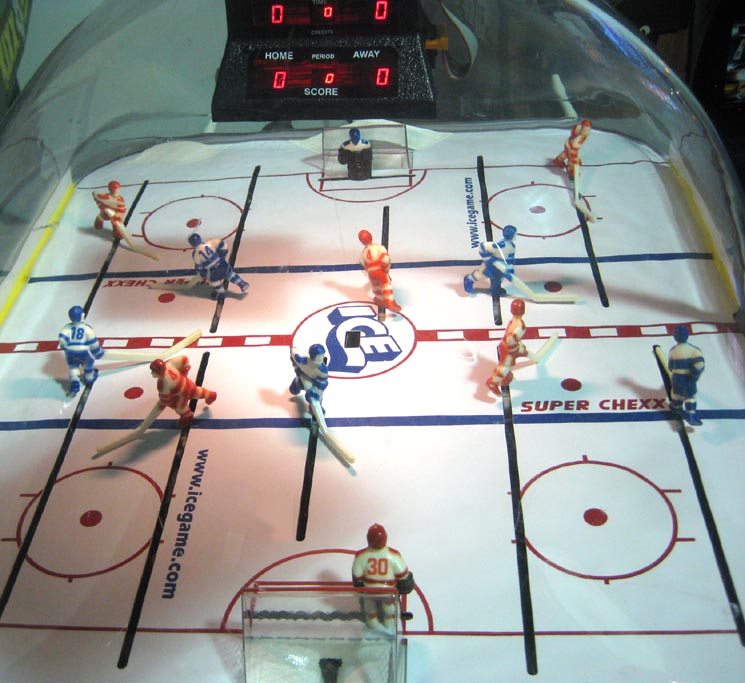 What happens when your favorite hockey team is headed for another losing season? When you get sick of following your hockey team’s on-iceperformance, the best thing to do is follow their off-ice activities. When the narrative of the game is getting old, repetitive and boring, it’s time to follow another story.
It’s time to follow the Twitter account of S Horcov.
S Horcov (@SHorcov) is the captain of the Edmonton Oilers. He has experience fighting Chechens, loves bragging about his intimate relationship with his wife Olga, and has some explicit descriptions of his teammates. A true Komrade who enjoys his life as a hockey player.
But alas, S Horcov is not real. He’s a Russian version of Oilers captain Shawn Horcoff but has become more than just a spoof account. Instead, Komrade Horcov has merged himself with the transmedia storytelling the Edmonton Oilers hockey club has used to provide content to their fans. Through the game itself, newspaper articles, their official website and social media, the Oilers create and spread narratives surrounding the team. But now, we have S Horcov who creates a fictional persona for current players who then go through all sorts of experiences and adventures.
On a recent road trip in Ottawa, for example, the Oilers kidnapped the PM.
Update: Backhand Shelf interviews @SHorcov here.
Aside from the narratives created using the Twitter account, it’s the convergence culture that draws attention. Our culture is dispersed across different platforms in the form of content, but merges together to create a unique experience for fans. But here we see the production of that content put in the hands of an outsider who quickly remixes what’s available to them. S Horcov creates characters based on the actual hockey players and uses current events (i.e., trade rumours) and the hockey schedule to extend the narrative.
Jenkins, H. (2007, March 22). Transmedia Storytelling 101. Retrieved from http://www.henryjenkins.org/2007/03/transmedia_storytelling_101.html
Hockey Gossip and Blogs
 Saw a documentary called Teenage Paparazzo, which follows the adventures of a 14 year old paparazzo and explores the relationship between celebrities, paparazzis and fans. Adrian Grenier interviews different paparazzos, celebrities and academics, including Dr. Henry Jenkins of MIT, and highlights the celebrity-obsessed culture across different mediums.
In a conversation with Adrian Grenier, Dr. Jenkins had this to say regarding celebrity gossip:
Going from a society of small towns where people gossiped about the town drunk to an era of the internet, who do we choose to talk about? We can’t talk about our aunt and our uncle or the guy down the street because we don’t share that in common.
But we share you in common.
So I would say one of your jobs as a celebrity is to be the subject of gossip. When we gossip about someone, the person we’re gossiping about is actually less important than the exchange that takes place between us. We’re using that other person, the celebrity, the town whore, whatever, as a vehicle for us to sort of share values with each other to sort through central issues that are…
Ironically enough, Dr. Jenkins was interrupted by a fan asking to take a picture with Grenier.
There’s definitely a lot of similarities between those who follow celebrities and those who follow hockey. Aside from both being groups of fans who express their fandom using different outlets, they both engage in gossip.
I remarked last year at the amount of speculation that is prevalent throughout the game of hockey and what causes its generation. Dr. Jenkins’ remarks add another element to the rumor/gossip activity, which is the fan desire to exchange values and ideas with one another. The game itself is the common object to discuss and it’s through the interaction with other fans that allows them to express their own values and ideas.
This opportunity to share is what makes blogging the ideal platform for hockey fans. It’s easy to set up a blog, publish content and discuss with other fans. Blogs also offer a way to keep a running log of fan values and ideas, and have made it possible to link the content across a massive network. Values and ideas are able to develop and evolve over time, which is then used to fuel more gossip and speculation.
Grenier, A. et al. (Producers), & Grenier, A. (Director). (2010). Teenage Paparazzo [Motion picture]. United States: Reckless Productions.
The Hockey News: 100 People of Power and Influence (2012)

Source: The Hockey News
Different list, same flaws.
The Hockey News released its annual list of people with power and influence this month. I mentioned last year that the list completely ignores those with online influence and even cited one blogger who broke a major story in 2011. The good news is they included Dellow in their list this year. The bad news is, they ignored everyone else.
Here’s what Jason Kay, the editor of The Hockey News, says about the top 100 people of power and influence:
“We consult handfuls of industry experts to validate, or deny, names we have in mind and to unearth people we may not have considered. And it’s important to us that the list reflects all aspects of our world: from executives to players; from heads of industry to media; from viewers to doers” (P. 4).
First off, there isn’t much to get fired up about since the list lacks any real research. Its based on the top newsmakers of the years, plus the opinions of those within the hockey community. Secondly, Kay (2012) wants to reflect all aspects of our world, but leaves out fans and online activity. The kicker for me is the last part claiming that the list wants to include everyone “from viewers to doers” (P. 4). How about viewers that are doers? Fans that do more than just consume the product but actually do something with what’s available.
I’ll leave it to The Hockey News to come up with their lists. But until they start exploring more than newsmakers and use valid and reliable research methods, it’ll lack any credibility.
Campbell, K. (2012). 100 People of Power and Influence. The Hockey News, 65 (14), p. 16-31.
Rod Phillips
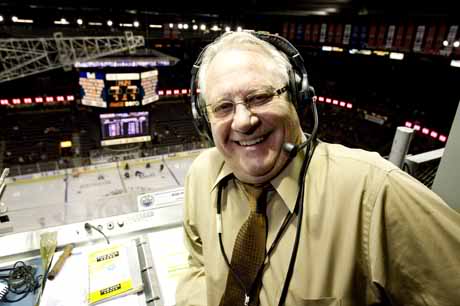
Source: Edmonton Journal
The amount of attention and accolades Philips has received is for good reason. For so long he was the voice of the Oilers. TV commentators came and went, since the Oilers broadcasted their games across different networks, so there never was an attachment to a single individual on television. No other play-by-play man, aside from Phillips, could be considered “our” guy.
To me, Phillips was that narrator whose voice echoed the game. The game itself has so much going on, but you begin to rely on his judgment and interpretation of the events. After getting used to his tendencies and phrases, it becomes hard to imagine the game without him.
I think the attachment fans have developed with Phillips is because the narrative of the game is so important. Our experience, interpretation and understanding of the game is through narration. Phillips told a story each game to keep listeners informed and entertained. He never did anything that made him unique or irreplaceable. Yet he remained a highly influential person for fans because of his storytelling abilities.
Edmonton Oilers Legacy – Rod Phillips. (n.d.). Retrieved March 30, 2011 from http://www.oilersheritage.com/legacy/contributions_announcers_rodphillips.html
MacKinnon, J. (2011, March 30). The Voice Part of Oilers History. Edmonton Journal. Retrieved from http://www.edmontonjournal.com/sports/John+MacKinnon+Voice+part+Oilers+history/4526619/story.html?cid=megadrop_story
McCurdy, B. (2011, March 29). Rod’s Retirement Roast: Fans’ Roundtable. The Copper and Blue. Retrieved from http://www.coppernblue.com/2010/6/10/1492529/rods-retirement-roast-fans.
Oiler’s Rebuild
 After another disappointing season for the Oilers, my wife has decided to give an outsiders take on the teams rebuilding efforts.
Oilers Rebuild – I don’t get it.
I’m not a hockey expert. I catch the game every so often and watch the Oil Change series, but that’s the extent of my knowledge. I grew up in the 80s watching the Oiler’s glory years. So naturally, I will always support the Oilers, but I’m not sure that I support the Oiler’s Rebuild.
Generally, long term projects tend to be avoided. The reason is simple: the longer the project, the more uncontrollable factors there are to deal with and the more likely a project is to fail. In my opinion, the Oiler’s rebuild project is no different.
First, the lack of resources (people) often plagues long term projects. Projects often lose momentum when key resources are lost or new ones are gained. This is common on projects that last 3-5 years and people move on for various reasons. I see this as an issue for the rebuild as well. Oiler’s Management continuously refer to players (ex. Hall, Eberle, Paajarvi) as ‘pieces of the puzzle’. But what happens if those players get hurt and we lose a piece of the puzzle? Eventually you can’t make the puzzle. My point is not that the Oilers will never be better, but that resources/players are not static. They get traded, injured, quit, etc. So, how do you rebuild if you don’t know what pieces you’re going to have to work with at any given time? They didn’t know that how many people they would lose to injury or trades this year. How can they plan for 3 years down the road?
Secondly, changes in technology or external factors affect long term projects. What was the right way of doing things at one time, is not always the right way today. Hockey is no different. The game of hockey is evolving every year – the rules, the players, the techniques, the skill, right down to the ice they skate on…it’s all evolving. Would Wayne Gretzky be the player he was in the 80s in today’s hockey? It’s tough to say since the game and its players are different now than they were 20 years ago. Having stated that, what are the Oilers ‘rebuilding’ to match up to? I see the goal as a moving target. So, how do you assess what you need when you don’t where you, the game and your opposition is headed?
Finally, how do you know when the rebuild is done? How do you measure its progress and success? One might argue that making the playoffs means that the ‘rebuild’ is working. But in 2006, the Oilers made the playoffs and didn’t need a rebuild. Many teams have attempted the ‘rebuild’ , some successful (Pittsburgh, Chicago) but the majority have failed (Atlanta, St. Louis, Florida, Columbus, etc). So what made some of them successful over others? How do you know it wasn’t just a fluke? If we do make the playoffs in a year, then why can’t we just attribute it to work of the players and coaches rather than some complex rebuild formula?
Like I said earlier, I’m not hockey expert. There may be intricacies of a ‘rebuild’ that I fail to understand. But as it stands right now, I just don’t get it.
Oilers4Life

