I think we form social networks because the benefits of a connected life outweigh the cost…The spread of good and valuable things is required to sustain and nourish social networks.
Author: sunilagni
Convergence Culture
 Dr. Henry Jenkins’ book Convergence Culture: Where Old and New Media Collide is a must read for anyone studying fans and participatory culture. Here’s a summary from ConvergenceCulture.org.
CONVERGENCE CULTURE explores the ways relations between media producers and consumers are changing. Right now, it is assumed that consumers will participate in the flow of media but there is wide disagreement about the terms of that participation. As a result of digital media, consumers are acting as communities – what Pierre Levy calls “collective intelligence” – rather than simply as individuals. In this way, media consumption becomes a profoundly social process.
Ultimately, Jenkins argues that the debate over convergence will redefine the face of American popular culture. Industry leaders see opportunities to direct content across many channels to increase revenue and broaden markets. At the same time, consumers envision a liberated public sphere, free of network controls, in a decentralized media environment. Sometimes corporate and grassroots efforts reinforce each other, creating closer, more rewarding relations between media producers and consumers. Sometimes these two forces are at war.
Hockey Fans and Owners: Rules, Expectations and Actions

Source: Yahoo! Sports
The banner showed a man wearing a Canadiens jersey and slicing shawarma with a sword. Underneath the cartoon-like caricature was a large “Go Habs Go” message.
Issa quickly received a letter from an NHL lawyer telling him he was violating league copyrights and to remove the banner. At first, he simply painted over the Canadiens logo on the shawarma slicer’s jersey, but another letter quickly followed in January telling Issa that “Go Habs Go” also represents a trademark.
The other is out of Vancouver, where a car dealership was asked to take down a sign that supported the local hockey teams playoff run. From The National Post:
Doug Lum, general manager of the Destination Auto Group, said he received the letter by both courier and email Thursday from the NHL’s legal department.
The letter refers to a large sign on the window of the company’s Kingsway Honda dealership.
The Teardrop Flags reads: “Go Canucks Go!” with the words “Honk if you’re a fan” underneath. There is also a small Canucks logo on the window.
It’s clear that fans and team owners have certain expectations of one another. Fans expect entertainment and information when the need it. Owners see fans as a source of revenue and an audience for their product. Fans must also abide by certain rules, such as the ones established by the Canucks and Canadiens. Rules are a given in any relationship, whether business, personal, online or offline.
Within a network of groups and individuals related to the game, relationships between entities rely on expectations. From there, these expectations can evolve and determine if and how the relationship will continue to exist. Expectations play a role in the fluidity of the network with rules and actions changing all the time. From these relationships come action by fans, as well as league managers and team owners.
What I find surprising is how harsh both the Canucks and Canadiens franchises reacted to signs clearly supportive of them. Additionally, both organizations were able to copyright a slogan that was created by fans (“Go Team Go”). Even in a digital age where anyone can remix cultural artifacts such as team logos and images, both franchises still view their fans as simple consumers rather than creative produsers (Bruns, 2005). I don’t think this will impact future fan behavior since the web is filled with fan generated content that does not have full permission from the teams.
Bruns, A. (2005, March 11). Some Exploratory Notes on Produsers and Produsage. Retrieved from http://snurb.info/index.php?q=node/329. (2011, May 16).
Restaurant owner fined $89,000 for showing some Habs spirit. (2011, May 16). CTV Montreal. Retrieved from http://montreal.ctv.ca/servlet/an/local/CTVNews/20110516/mtl_basha_110516/20110516/?hub=MontrealHome.
Wyshynski, G. (2011, May 17). Is NHL wrong for serving $89,000 fine to Montreal restaurant? Yahoo! Sports. Retrieved from http://ca.sports.yahoo.com/nhl/blog/puck_daddy/post/Is-NHL-wrong-for-serving-89-000-fine-to-Montrea?urn=nhl-wp5062. (2011, May 18).
Ziemer, B. (2011, May 2). Car dealership’s Canucks Sign Draws NHL’s Ire. The National Post. Retrieved from http://sports.nationalpost.com/2011/05/02/car-dealerships-canucks-sign-draws-nhls-ire. (2011, May 18).
Social Networks & Information Gatekeepers
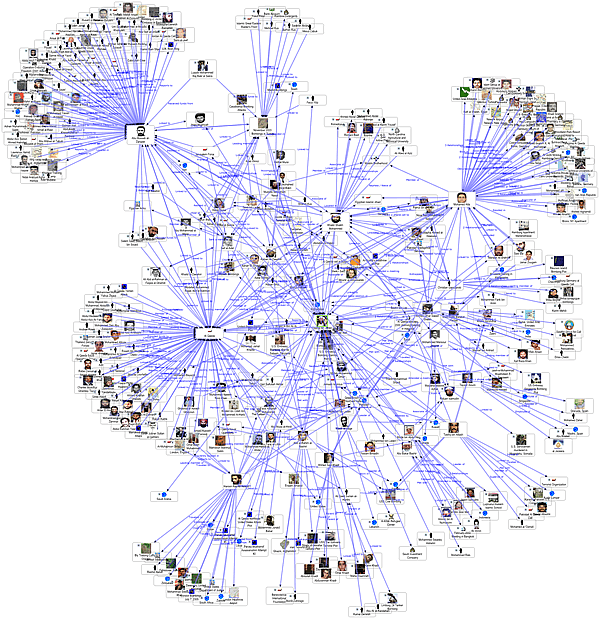 A real tension exists between hockey bloggers and mainstream media (MSM). Both groups have their strenghts and weaknesses, but far too often it has become a childish argument of who produces better quality and which is a better source of knowledge and information.
Placing everyone tied to the game of hockey in a giant network diagram, you can start to see why this tension exists. Include in this giant web the fans, team owners, players, sports journalists and anyone else with some relationship to the game. Strictly based on communication patterns, these individuals are tied to one another with short linkages representing close ties. Information would be shared much easier and more often across closer ties. Based on relationships and goals, individuals would group together and maintain ties.
Communication being the exchange of information, is of high value to fans. They are active individuals who demand this information for their personal interest, knowledge and engagement with the game. Over different mediums, fans connect with sources of information and share what they know and understand with others.
The network they’re a part of is a fluid and dynamic stucture. The size of the network changes, links are formed and broken, and groups gather and disband. But within this network are numerous gatekeepers who decide what information will enter the network. In this case, these gatekeepers are the team, their employers as well as mainstream media outlets.
Professional sports teams are major businesses, so the information they have is closely guarded. Hockey clubs are competing with one another and must do whats best for their own operations. The information teams share must adhere to the goals of their organization, with sponsors and investors in mind. Media outlets that cover the team must follow the direction of teams if they want to continue having access to players and managers. Withholding information from a social network, as well as releasing half-truth material, will cause tension between bloggers and MSM. But it’s their actions, and inactions, within a social network that maintains it.
Gatekeepers are active in the social network as consumers of information, but fail to reciprocate. Bloggers and readers can get together and discuss a topic out in the open for everyone, including gatekeepers to read. Yet these gatekeepers will not share what they know as honestly and openly as the rest of the social network.
Second, gatekeepers attempt to control what members and groups of network know, understand and experience about the game. If a team loses badly, their official website may report on the positives instead of particular reasons why they lost. This would be an attempt to divert negative reaction, maintain a positive outlook on the team and keep fans coming back. The problem with trying to control what people know is that in a social network filled with links for information exchange, knowledge is being created, developed and shared.
The social network that these gatekeepers are trying to influence will generate knowledge with or without them. If what a team releases goes against the knowledge of that network, they’ll feel an instant backlash. Web technology and communication tools have made this network highly advanced in terms of knowledge development about the game. As a result, gatekeepers are seen with some suspicion and resentment for their contributions to the network.
University of Twente. (2010, September 7). Gatekeeping. Retrieved from
http://www.utwente.nl/cw/theorieenoverzicht/Theory%20clusters/Media%2C%20Culture%20and%20Society/gatekeeping.doc
Moneyball – Baseball, Hockey and Edmonton
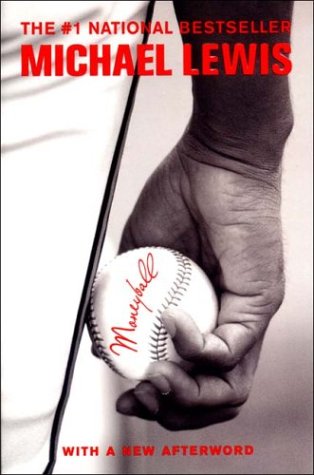 Had the chance to read Michael Lewis’ “Moneyball: The Art of Winning an Unfair Game”. It follows the Oakland Athletics implementation of sabermetrics, a method of analyzing the game, which was developed by Bill James in the 1970’s. Using a small budget, compared to the Yankees and Red Sox, Athletics general manager Bill Beane used a number of James’ theories to not only find players, but also measure their performance.
Bill James sought to uncover an objective way to look at the game. He used statistical theories and methods to measure parts of baseball that were otherwise ignored. After producing and publishing “1977 Baseball Abstract: Featuring 18 Categories of Statistical Information You Just Can’t Find Anywhere Else”, James developed a small fanbase that steadily grew with each annual abstract.
According to Lewis (2004), two things happened that made the questions James raised more answerable and more valuable. One was the advancement in computer technology, which made compiling and analyzing data more efficient. The second event was the dramatic increase in player salaries (p. 72).
It’s important to note that the statistical analysis of baseball isn’t just a method of dissecting a game. It also isn’t about implementing a new way to measure performance. Sabermetrics is about challenging the existing wisdom and knowledge. It’s okay if a new or old theory doesn’t work. What’s important is that there is a tension from which new ideas and approaches can be formed. Across the web, there are thousand of discussions about which method is better. What it does show is that baseball fans are actively engaged with the game. Drew Balen of Great White North Baseball describes sabermetrics as “a lifestyle of asking questions and thinking about daily occurrences in non-traditional ways…it’s about the process of learning”. James discusses his approach further in an interview with Slate Magazine.
Edmonton Connection
It goes without saying that there’s a big community of Oilers hockey fans online. As mentioned by Gabriel Desjardins of Behind the Net, the Oilers data on his advanced statistics website receives the most hits compared to other teams.
During Billy Beane’s reign as GM of the Athletics, the organization had a minor league affiliation with the now defunct Edmonton Trappers. Is there a possible correlation between baseball analysis and hockey analysis in Edmonton? If sabermetrics is a process of learning, is it possible that baseball fans applied it to the game of hockey? The challenge would be to find baseball fans and determine what kind of networks they had as fans.
Lewis, M. (2004). Moneyball: The Art of Winning an Unfair Game. New York: W.W. Norton & Company.
Billy Beane. (2011, April 1). In Wikipedia, The Free Encyclopedia. Retrieved April 9, 2011, from http://en.wikipedia.org/w/index.php?title=Billy_Beane&oldid=421773445
New Media Narratives
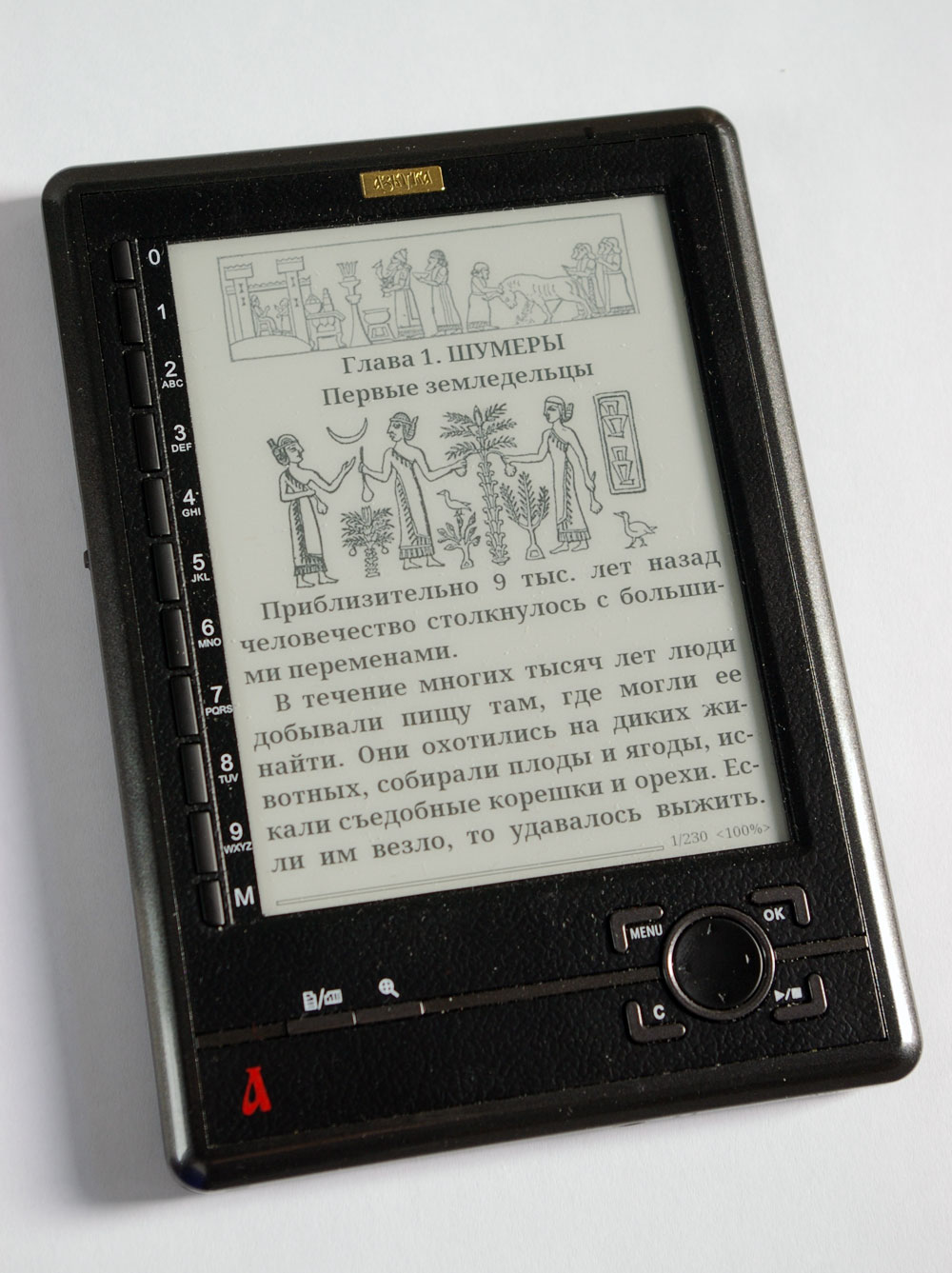
Source: Wikimedia Commons
New media is the “amalgamation of traditional media such as film, images, music, spoken and written word, with the interactive power of computer and communications technology, computer-enabled consumer devices and most importantly the Internet.” (Wikipedia)
New media studies is a transdisciplinary field of scholarly inquiry. According to Barbell & Gunther Tress and Gary Fry, transdiscplinary studies are:
projects that both integrate academic researchers from different unrelated disciplines and non-academic participants, such as land managers and the public, to research a common goal and create new
knowledge and theory. Transdisciplinarity combines interdisciplinarity with a participatory approach.
Eight propositions of what new media is can be found in the 2002 book “New Media Reader” (edited by Noah Wardrip-Fruin and Nick Montfort). Source: Wikipedia.
1. New Media versus cyberculture
2. New Media as Computer Technology Used as a Distribution Platform
3. New Media as Digital Data Controlled by Software
4. New Media as the Mix Between Existing Cultural Conventions and the Conventions of Software
5. New Media as the Aesthetics that Accompanies the Early Stage of Every New Modern Media and Communication Technology
6. New Media as Faster Execution of Algorithms Previously Executed Manually or through Other Technologies
7. New Media as the Encoding of Modernist Avant-Garde; New Media as Metamedia
8. New Media as Parallel Articulation of Similar Ideas in Post-WWII Art and Modern Computing
Lev Manovic’s “New Media from Borges to HTML” gives a review of these eight concepts.
Henry Jenkins’ “Eight Traits of the New Media Landscape” looks past the tools and focuses more on the context of new media.
Helga Nowotny, Peter Scott and Michael Gibbons “Introduction: ‘Mode 2’ Revisited: The New Production of Knowledge”.
Transliteracy is:
The ability to read, write and interact across a range of platforms, tools and media from signing and orality through handwriting, print, TV, radio and film, to digital social networks.
Source: Transliteracy Research Group, Wikipedia
Assignment 2: Choose 3 texts (blog posts, journal articles, book chapters, YouTube videos etc…) that deal with this week’s key ideas of participatory literacy, smart mobs, community/collective action.
We summarized our texts and completed a blog post open to the rest of the class for discussion.
Here are my three blog posts found on the course blog:
Ebbsfleet United
Nordiques Nation
Homebrew Video Games
Assignment 3: Remix culture is fundamentally at odds with older media institution and practises. Investigate a case study which illuminates these tensions.
I used the OilersNation photoshop contest as a case study to highlight three areas of tension: copyright issues, message control and audience vs community. The final paper can be found on the course blog and here on this blog.
Course blog: http://newmedianarrativesonline.blogspot.com
Course blog for the 2012 students: http://nmnonline.blogspot.ca
Hockey Fans and Remix Culture
The following post was for an assignment in New Media Narratives.
Topic: Remix culture is fundamentally at odds with older media institution and practises. Investigate a case study which illuminates these tensions.

Source: Wikimedia Commons
Source: banksy.co.uk
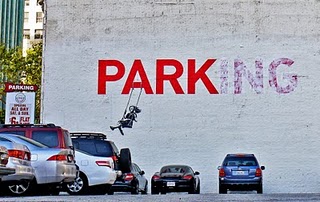
With the cost of computers reducing and image editing software becoming easier to use, photoshopping has become a popular remixing tool for political statements and individual expression. The act of splicing images from different sources together to create a new message and content on the web reflects the remix culture Lessig (2007) refers to. Because of the freedom remix culture demands, it is fundamentally at odds with older media institutions and practices. As demonstrated by photoshopping, the read/write culture does not conform to established and traditional methods of copyright laws, intellectual property rights and publication methods.
CASE STUDY: OILERSNATION PHOTOSHOP CONTEST
OilersNation, a fan website, recently hosted a photoshop contest that invited readers to submit their edited images inspired by the Edmonton Oilers. Original narratives and themes from movies, television shows and advertising are used with Oiler-related images to create new content. Fans expressed their feelings and thoughts regarding the Oilers season, team managements decisions as well as optimism and support for the clubs future. Based on the comments visitors left on the site, one entry was selected to win a prize.
Photoshopping requires some knowledge and experience with the image editing software as well as the intended audience. Editors had to seamlessly mesh hockey images with familiar, pop culture, items so that an explanation was not required. Contest entrants were sharing their works with a hockey fan community, a niche audience, that had to understand their message easily.
The desire of fans to create new content using copyrighted material such as player images and movie posters is a result of the remix culture that exists today. But as this case study demonstrates, there is a tension between the remix culture that encourages the expression of fans and the read/only practices of traditional media institutions.
COPYRIGHT ISSUES
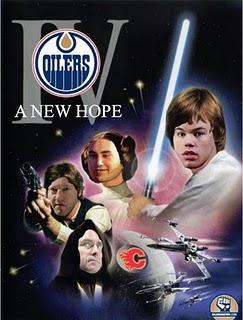
Source: OilersNation.com
Original images from movies and television shows are valuable to its owners since they took time, resources and capital to create. Yet, franchises such as Star Wars or Bob the Builder do not appear to have received any reimbursement for the images that were used. But in order for fans to express themselves, they need access to these copyrighted images.
The read/only culture that original material owners demand is protected by copyright laws. As Lessig (2007) states, “By default, read/write use violates copyright law. Read/write culture is thus presumptively illegal”. Lessig urges that government legislation must find a balance that allows for creativity but also compensate artists (Lessig & Schlesinger, 2008). In 2001, Creative Commons (Zittrain, 2009) was established to give creators the ability to copyright their material but also allow for certain uses of their work. Their goal is to allow ones “creative, educational, and scientific content [to be] instantly more compatible with the full potential of the internet” (“About – Creative Commons”, n.d.). It remains to be seen if this organization can bridge the ideological differences, regarding copyright issues, between read/write and read/only culture.
MESSAGE CONTROL
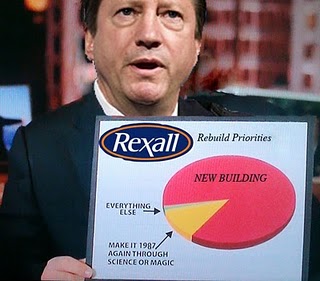
Source: OilersNation.com
The fans who photoshopped images are using content that was meant for a different purpose. Images of hockey players were not intended to be mashed with a Star Wars poster or to be mocked. Professional sports, being a business, must carefully invest in the creation of original work to generate revenue. Teams are accountable to investors, a board of governors and corporate sponsors. The messages they create must adhere to the goals of their organization, with external stakeholders in mind. When a fan remixes the original content to create a message that does not represent the organization, legal action may be sought for misrepresentation.
Instead of simply consuming the message an organization such as the Edmonton Oilers create, fans are utilizing social media, or web 2.0. applications (O’Reilly, 2005), to create and share their own messages. The barriers to participate and get things done, according to Shirky (2008), have dropped, allowing fans to participate in the creation and control of content. Social media applications such as blogs, Facebook and Twitter provide a voice to fans, making them a source of information; information that traditionally is under the control of the original creators.
AUDIENCE VS COMMUNITY

Source: OilersNation.com
According to Mason (1999), it is the uncertainty of games and player performance that professional sports sells to its audience. Fans in turn buy tickets to events and purchase merchandise. Fans have also demonstrated their desire to not only consume, but to actually do something with the product sold to them by professional sports. Examples include fantasy league pools, where fans select players at the start of the season and collect points to compete with other fans. Phone applications such as Pre Play Sports (“Pre-Play Sports”, n.d.) allow fans to predict events during a live football game and compete with others. Fans have also demonstrated their creative and collaborative abilities by taking the statistics generated by the league and developing their own methods of tracking team and player performance (Staples, 2008). These fans are conducting, what Bruns (2008) describes as, “produsage”, which is the “collaborative and continuous building and extending of existing content in pursuit of further improvement” (p. 15).
The ideologies and characteristics of this participatory culture (Jenkins, 2008) are in stark contrast to those envisioned by creators of original work. The hockey fan community and its remix culture have a different approach to creating content than the read/only audience the Edmonton Oilers may view them as. This leads to tension since the professional sports teams and leagues cannot control how their property is used within this community. It is difficult for them to determine who is using their material and for what purposes. However, In response to the evolution of audiences becoming communities, the Oilers have begun interacting with fans using different social media applications such as Facebook and Twitter. The team can be a part of the fan network, rather than remain as outsiders.
SUMMARY
As demonstrated by the OilersNation photoshop contest, a remix culture is fundamentally at odds with traditional media institutions and practices. Copyright issues, message control and the evolution of audiences to active communities demonstrates the ideological differences between remixers and original creators of work. In the future, the way content and its message is controlled over new mediums requires the involvement of the read/write and read/only culture. A balance must be found to protect the work of original creators, but also provide people the freedom and opportunity to become engaged with their culture.
SOURCES
About – Creative Commons (n.d.). Retrieved from http://creativecommons.org/about. (2011, March 31).
Banksy Outdoors (n.d.) Retrieved from http://www.banksy.co.uk/outdoors/outvarious/horizontal_1.htm. (2011, March 31).
Bruns, A. (2009). Blogs, Wikipedia, Second Life and Beyond. New York: Peter Lang Publishing.
Brustein, J. (2011, March 11). A Better Way to Watch Sports. The New York Times. Retrieved from http://www.nytimes.com/2011/03/13/weekinreview/13watch.html. (2011, March 25).
Gretz, W. (2011, March 11). Photoshop contest entries: updated. Retrieved from http://oilersnation.com/2011/3/11/photoshop-contest-entries. (2011, March 12).
Horn, J. & Lee, C. (2010, January 24). Sundance 2010: Banksy rocks festival with ‘Gift Shop’. LA Times. Retrieved from http://latimesblogs.latimes.com/movies/2010/01/sundance-2010-banksy.html. (2011, March 31).
Jenkins, H. (2006). Fans, Bloggers and Gamers: Exploring Participatory Culture. New York: New York University Press.
Jenkins, H. (2006). Convergence Culture: Where Old and New Media Collide. New York: New York University Press.
Lankshear, C. & Knobel, M. (2007, May). Digital Remix: The Art and Craft of Endless Hybridization. Keynote presented to the International Reading Association Pre-Conference Institute “Using Technology to Develop and Extend the Boundaries of
Literacy”. Retrieved from http://extendboundariesofliteracy.pbworks.com/f/remix.pdf. (2011, March 28).
Lessig, L. (2005). The people own ideas!. Technology Review, 108 (6). Pp. 46-53.
Lessig, L. (2007, November). Larry Lessig: On laws that choke creativity [Video file]. Retrieved from http://www.ted.com/talks/larry_lessig_says_the_law_is_strangling_creativity.html. (2011, March 30).
Lessig, L. & Schlesinger, R. & (2008). Don’t Make Kids Online Crooks. U.S. News & World Report, 145 (14).
Mason, D.S. (1999). What is the sports product and who buys it? The marketing of professional sports leagues. European Journal of Marketing, 33 (3/4). Pp. 402-418.
Fitzgerald, B & O’Brien, D. (2006). Mashups, remixes and copyright law. Internet Law Bulletin 9(2):pp. 17-19. Retrieved from http://eprints.qut.edu.au/4239/1/4239.pdf. (2011, March 30).
O’Reilly, Tim. (2005). “What is Web 2.0?”. Retrieved from: http://oreilly.com/web2/archive/what-is-web-20.html. (2011, March 30).
Pre-Play Sports (n.d.). Retrieved from http://www.preplaysports.com/the-app. (2011, March 31).
Rheingold, H. (2002). Smart Mobs: The Next Social Revolution. Cambridge, Massachusetts: Perseus Books.
Shirky, C. (2008). Here Comes Everybody. New York: Penguin Press.
Staples, D. (2008, October 14). Frequently Asked Questions About True Plus/Minus [Web log]. Retrieved from http://communities.canada.com/edmontonjournal/blogs/hockey/archive/2008/10/14/frequently-asked-questions-about-the-errors-stat.aspx. (2011, March 31).
Zittrain, J. (2009). How to end the copyright wars. Nature, 457 (7227). Pp. 264-265.
Rod Phillips
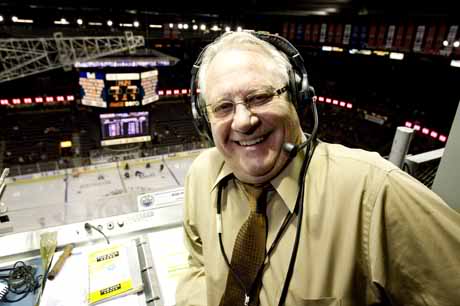
Source: Edmonton Journal
The amount of attention and accolades Philips has received is for good reason. For so long he was the voice of the Oilers. TV commentators came and went, since the Oilers broadcasted their games across different networks, so there never was an attachment to a single individual on television. No other play-by-play man, aside from Phillips, could be considered “our” guy.
To me, Phillips was that narrator whose voice echoed the game. The game itself has so much going on, but you begin to rely on his judgment and interpretation of the events. After getting used to his tendencies and phrases, it becomes hard to imagine the game without him.
I think the attachment fans have developed with Phillips is because the narrative of the game is so important. Our experience, interpretation and understanding of the game is through narration. Phillips told a story each game to keep listeners informed and entertained. He never did anything that made him unique or irreplaceable. Yet he remained a highly influential person for fans because of his storytelling abilities.
Edmonton Oilers Legacy – Rod Phillips. (n.d.). Retrieved March 30, 2011 from http://www.oilersheritage.com/legacy/contributions_announcers_rodphillips.html
MacKinnon, J. (2011, March 30). The Voice Part of Oilers History. Edmonton Journal. Retrieved from http://www.edmontonjournal.com/sports/John+MacKinnon+Voice+part+Oilers+history/4526619/story.html?cid=megadrop_story
McCurdy, B. (2011, March 29). Rod’s Retirement Roast: Fans’ Roundtable. The Copper and Blue. Retrieved from http://www.coppernblue.com/2010/6/10/1492529/rods-retirement-roast-fans.
Oiler’s Rebuild
 After another disappointing season for the Oilers, my wife has decided to give an outsiders take on the teams rebuilding efforts.
Oilers Rebuild – I don’t get it.
I’m not a hockey expert. I catch the game every so often and watch the Oil Change series, but that’s the extent of my knowledge. I grew up in the 80s watching the Oiler’s glory years. So naturally, I will always support the Oilers, but I’m not sure that I support the Oiler’s Rebuild.
Generally, long term projects tend to be avoided. The reason is simple: the longer the project, the more uncontrollable factors there are to deal with and the more likely a project is to fail. In my opinion, the Oiler’s rebuild project is no different.
First, the lack of resources (people) often plagues long term projects. Projects often lose momentum when key resources are lost or new ones are gained. This is common on projects that last 3-5 years and people move on for various reasons. I see this as an issue for the rebuild as well. Oiler’s Management continuously refer to players (ex. Hall, Eberle, Paajarvi) as ‘pieces of the puzzle’. But what happens if those players get hurt and we lose a piece of the puzzle? Eventually you can’t make the puzzle. My point is not that the Oilers will never be better, but that resources/players are not static. They get traded, injured, quit, etc. So, how do you rebuild if you don’t know what pieces you’re going to have to work with at any given time? They didn’t know that how many people they would lose to injury or trades this year. How can they plan for 3 years down the road?
Secondly, changes in technology or external factors affect long term projects. What was the right way of doing things at one time, is not always the right way today. Hockey is no different. The game of hockey is evolving every year – the rules, the players, the techniques, the skill, right down to the ice they skate on…it’s all evolving. Would Wayne Gretzky be the player he was in the 80s in today’s hockey? It’s tough to say since the game and its players are different now than they were 20 years ago. Having stated that, what are the Oilers ‘rebuilding’ to match up to? I see the goal as a moving target. So, how do you assess what you need when you don’t where you, the game and your opposition is headed?
Finally, how do you know when the rebuild is done? How do you measure its progress and success? One might argue that making the playoffs means that the ‘rebuild’ is working. But in 2006, the Oilers made the playoffs and didn’t need a rebuild. Many teams have attempted the ‘rebuild’ , some successful (Pittsburgh, Chicago) but the majority have failed (Atlanta, St. Louis, Florida, Columbus, etc). So what made some of them successful over others? How do you know it wasn’t just a fluke? If we do make the playoffs in a year, then why can’t we just attribute it to work of the players and coaches rather than some complex rebuild formula?
Like I said earlier, I’m not hockey expert. There may be intricacies of a ‘rebuild’ that I fail to understand. But as it stands right now, I just don’t get it.
Oilers4Life
Transmedia Storytelling – Teenage Mutant Ninja Turtles

Here’s an example of transmedia storytelling I posted on our class blog. You can find more details about transmedia storytelling from Dr. Henry Jenkins’ blog post.
TMNT used various platforms to continue on and develop its storylines. Aside from the Saturday morning cartoons, there were comic books, feature films and board games. They also utilized video games to engage fans in a medium that not only continued the storyline, but also allowed fans to take control.
The television shows worked well for the storyline since it combined visual and audio effects to draw viewers. It gave fans a sense of what the characters are like and how they react when in conflict with villians. This also established the vision of the animators and creators of TMNT.
Video games gave fans the power to control the heroes within established storylines. Video games works well as a platform since fans have a clear goal in mind, which is to complete the story and finish the game. How they do this is up to player as they decide which character they get to be and control how exactly they finish off the villains. Fans become more familiar with the characters as well as the TMNT narrative.
Photo: http://www.ign.com/blogs
Jenkins, H. (2007, March 22). Transmedia Storytelling 101. Retrieved from http://www.henryjenkins.org/2007/03/transmedia_storytelling_101.html

