Free Public Lecture on Hockey Analytics

Happy to announce that I’ve put together a short public lecture on hockey analytics, scheduled for  Wednesday March 26th at the University of Alberta.

Here’s the general description of the session:

The field of Hockey Analytics continues to gain importance as more stakeholders, including fans and teams, are examining data and developing new ideas regarding the game. With the advancement of communication technology and analytic tools, fans have taken a greater role in developing new methods of measuring team and player performance. New ideas are often communicated and developed amongst fans through blogs, message boards and other social media tools.

I’ll be joined by Michael Parkatti, a hockey analytics blogger at Boys on the Bus . Michael has extensive experience with hockey analytics and will be providing an overview of the field as well as the current concepts.

Alumni Council Meeting – Alumni Pride Chapter, Research at UAlberta, Volunteer Events

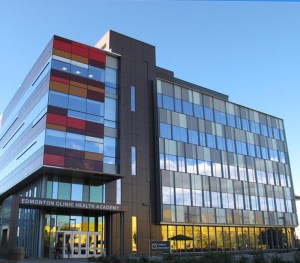
ECHAHere’s a quick recap of the topics discussed at the latest Alumni Council meeting.

We learned about a new Alumni Pride Chapter here at the University of Alberta. From the Alumni and Friends website:

We are proposing to develop the Pride Chapter to provide opportunities for sexual and gender minority (LGBTQ) and allied alumni to meet, socialize, and support current students and LGBTQ programs on the U of A campuses. Collectively, we are committed to making the University of Alberta a more welcoming, inclusive and supportive place for all LGBTQ students, faculty and staff.

Dr. Lorne Babiuk, VP of Research at the U of A, provided the Council with some information on his department and answered questions about funding and priorities. To learn more, check out the UAlberta Research & Creative Activities website.

Dr. Babiuk noted that Alumni play a major role in the development of research. Not only can they tap into the many resources and programs available, but they also promote the U of A to those unfamiliar with the great research being done.

Worth noting that the Faculty of Extension continues making major contributions in the research world. For more information about the different institutes and centers, visit the Faculty of Extension website.

Council also discussed new ways to support and encourage volunteerism among Alumni. It’s been amazing to see the volunteer work done by Alumni as well as current students in the community. For more information about how you can get involved and make a difference, check out the Alumni & Friends Volunteer website.

Congrats to Council member, and MACT colleague, Glenn Kubish. His blog article, The Accidental Protester, which was published in New Trail Magazine, received a CASE award. More details can be found on the UAlberta Tumblr site.

Teaching a Blogging Course

thinking-manHappy to announce that I’ll be teaching a short course on blogging this spring. The course is available through Next Step Continuing Education. It’ll be held on Thursday April 10th in Sherwood Park, Alberta.

I’ll definitely be relying on some of the concepts I picked up as a student in the MACT program. Without getting too deep into theory, one of my objectives is to promote the information and knowledge development that happens on blogs and in online communities. With more and more people getting online and producing content, I think it’s critical that people have a basic understanding on how to contribute and navigate online.

I’ll be sharing my experience with the tool and give some insight on how to use blogging for personal projects as well as in business, education and government.

Here’s the official description over at the Next Step Continuing Education website:

Find out about the foundational concepts of blogging and strategies to maintain a successful one. Also explore the benefits of working in an online environment and how to effectively use social media applications.

It’s available to everyone, so please share with anyone you know that might be interested.

To register for the class, click here: Next Step Continuing Education

Alumni Impact Report

impactreport-166The Alumni Impact Report was recently released to highlight the amazing work done by University of Alberta graduates around the world.

Highly recommend checking it out as it focuses on student success and the role the U of A has played in their lives.

You can read all of the content here at the New Trail website. Fantastic work by everyone involved!

MACT: “Harness the Power to Connect”

Nice little video put together by the Communications & Technology Master’s Program at the University of Alberta. To learn more about the program, including the research being done by faculty and staff, check out the MACT website.

Below are a few of the posts I’ve written about the program, including my experience and research interests.

You can also view my final research paper through the University of Alberta’s Education and Research Archive .

Alumni Council Meeting – U of A’s Economic Impact, Alumni Weekend, Venture Mentoring Service

ualberta-wallpaper05-fall-campus-640Attended my first Alumni Council meeting this morning. Thought I’d share some of the highlights here.

Alumni Weekend was a huge draw this past week with numerous events being held to celebrate past graduates. For a recap of the events, check out the Alumni Association’s Storify feed.

The study that examined the impact that University of Alberta alumni have had on the economy is well worth a read. Lots of numbers got published in the past few weeks in the papers, but there’s more to the research worth looking at. Dr. Anthony Briggs, one of the authors of the article, gave the group some additional insight into the alumni’s innovation and entrepreneurship, including what factors played a role during their time on campus. The full article is available via New Trail.

I also liked Dr. Briggs’ assertion that the U of A can’t be viewed as a “vessel” for research and innovation, but rather, more as a catalyst. For example, students may not start up new companies while on campus, but down the road, they may put together their ideas for launch.

The U of A is also embarking on a new program that will connect experienced entrepreneurs with fellow U of A alumni looking for guidance. The Venture Mentoring Service is set to launch later this year and aims to replicate a successful program offered by MIT.

Update (2013, November 20th): U of A alumni start up service to mentor young entrepreneurs – The Gateway

I also want to point out the fantastic work being done by the University Wellness Services. The group promotes healthy living and offers support to students and does a great job reaching out to students. To learn more about the great initiatives they have going on, including the Heroes for Health project, visit their website.

University of Alberta Alumni Council

bigmenulogoHappy to announce I’ll be joining the University of Alberta Alumni Council! I’ll be the representative for the Faculty of Extension which includes all the programs including the MACT Program.

You can read more about the Council and their mandates on the main website.  It’s been great getting to know all the members, who are all very proud alumni looking to make a difference.

If you’d like to get involved, the Alumni Association is looking to record 2,015 alumni volunteer experiences by the Alumni Association’s 100th birthday in 2015. If you’re looking to volunteer or would like to submit your volunteer experience, check out the Alumni Volunteer Challenge website.

Presentation of MACT Research at the ‘Friends of the U of A’ Annual Meeting

Enterprise Square, Edmonton

Enterprise Square, Edmonton

A group of us from the MACT program were invited as guests to attend the Friends of the University of Alberta annual general meeting on May 23rd at the Faculty Club. It was a great event that brought together the U of A Alumni group, the local business community and academic researchers. The Faculty of Extension and members of its MACT program were asked to provide a presentation showcasing their research accomplishments and the role they’ve played in the community.

Faculty of Extension Dean Katy Campbell started things off for us discussing the history of the faculty and the current research being done locally and internationally. A short video was shared with the group.

MACT Research

Dr. Ann Curry, a professor for the MACT program, then gave some background information about the program and what topics students cover. Dr. Curry currently teaches the Research Methods course for the program and has written books on censorship and intellectual freedom. More about Dr. Curry can be found at the MACT Professoriate Directory.

I then presented my research of online hockey fans and their role in the development of information regarding the game. I didn’t get into too much details about research methods, content analysis, etc, and instead talked about how fans are engaging with the game using hockey analytics. You can find my final research abstract, along with those of other MACT graduates here: MACT Student Research Project Abstracts.

Glenn Kubish then discussed his current research project examining the Stephen Duckett ‘cookie affair’. Glenn explained how the event played out from the newsroom’s point of view and in the digital world. For an excellent summary of his research, you can read “C is for Convergence!” or check out his blog.

Heather Gray discussed her current research into video conferencing and how an individuals perception of another person can change depending on how much of the person they see. Heather brought some great stats from her study that would be of interest to anyone that uses videoconferencing. You can check out her blog for more.

Teresa Sturgess then discussed her research into mobile device etiquette and the potential impact it has on businesses. Teresa’s research is an interesting one since companies are typically consumed with keeping up with mobile technology, that the personal, human impacts could be overlooked. You can check out her blog for more.

Dr. Tommy Barker, the newest professor of the MACT program, then discussed his research in risk communication with an emphasis on public health. Dr. Barker will also be teaching the Case Studies in Risk Communication course this year. More about Dr. Barker can be found at the MACT Professoriate Directory.

Thoughts

The event was a great opportunity for the MACT program to connect with the community and promote its research and accomplishments. I strongly feel the MACT program and its students will continue to play an integral role in the development of the communications and technology field. It’s especially encouraging to see past and current students using the tools and networks available to connect their work to various industries, to academic research development and to the community.

I’d like to thank the MACT Program, the Faculty of Extension, and the Alumni Association for the opportunity!

Google Glass in Professional Hockey

ImageWith the recent announcement that Google will soon release its wearable, augmented reality glasses, there has been a lot of discussion about how the technology can be used.

What’s most intriguing to me is how these wearable devices can be used in professional hockey. I’ve come up with three uses.

  1. Professional hockey teams could use the device to send real-time information to players throughout the game. This could include who is on the ice with them, what play to run or where to place the puck.
  2. Coaches could use the data collected by these devices and apply them to their strategies for each game.
  3. Those outside the game, such as fans, hockey analysts, sports journalists or league officials could use the data collected to do their own analysis.

These are all just random ideas, so until the limitations of the device are shared, we can dare to dream. I’d be interested to hear what others think of using Google Glass in professional sports.

More information about Google Glass can be found here.

Hockey Reporting and Hockey Analysis

usb1Typewriter“We shape our tools,and then our tools shape us.” – Marshall McLuhan


Influence of Technology on Sports Journalism

The impact of web technology has had a profound impact on how professional sports are consumed by fans. For example, fans have numerous options when they want to watch or listen to a game, including, among others, using mobile technology or data tracking software. Fans can interact and share content with others by publishing their thoughts and ideas about hockey on blogs and other social media platforms. To keep up with their loyal fan base, the NHL has readily adopted technology and software that helps their fans get closer to the game. Examples include providing detailed statistics available online or social media promotions to connect players to fans.

One area of professional sports that technology continues to strongly influence is sports journalism. Specifically, individuals who are employed by television broadcasters that hold NHL distribution rights, such as TSN or Sportsnet, newspapers and the NHL. These individuals typically have direct access to players and managers and are responsible for providing news and updates regarding NHL-related activity.

In the past, individuals who covered sports for the local news channel or newspaper were considered “reporters”. They would attend games and produce a story using the results of the event. Within the story would be quotes from players and coaches, a summary of key events within the game and maybe a preview of the next game. Since speculation is an important facet for professional sports, gossip regarding players and team could also be included, depending on the reporter.

Today, individuals who cover sports for mainstream media outlets are labeled all sorts of things. “Insiders”. “Analysts”. “Correspondents”. At first glance, they all appear to have the same role, which is to cover the game and provide some sort of content for fan consumption. But it’s the technology they use that differentiates them, as not all sports journalists produce the same kind of content. Understanding the tools they and what type of content they produce, can allow us to classify them and understand their roles and objectives.

Defining Reporting and Analysis

The technology sports journalists use differentiates those who report on the game, and those who analyze the game. Both “Reporting” and “Analyzing” are interchanged regularly, not only in sports journalism, but also other industries such as information management. While both actions produce content, they each entail different objectives.

I did a quick search online and came across this differentiation of Reporting and Analysis on a blog from Adobe, a major software company:

Report­ing: The process of orga­niz­ing data into infor­ma­tional sum­maries in order to mon­i­tor how dif­fer­ent areas of a busi­ness are per­form­ing.

Analy­sis: The process of explor­ing data and reports in order to extract mean­ing­ful insights, which can be used to bet­ter under­stand and improve busi­ness performance.

So applying these definitions to sports journalism, I’ve come up with this:

Hockey Reporting: The process of coordinating data and information into summaries that describe hockey-related events. This is someone that summarizes current events, including games, player or team performance and current rumors.

Hockey Analysis: The process of exploring data and reports in order to extract mean­ing­ful insights, which can be used to bet­ter under­stand the game and support further analysis and continue extending the knowledge surrounding the game. This would be someone that could summarize current events, but spends more time looking deeper into the data from hockey games to provide further insight.

These definitions need some work, so I’m hoping to get feedback from anyone interested.

Why the need to classify sports journalists?

It’s critical for fans to understand the roles and objectives of the contents’ producer. The present environment for hockey fans contains a lot of information, and it’s really up to them to filter through the noise to find value in the content available online, in print and on television. Fans do more than just consume the content as they have demonstrated their ability to extend the content by providing their own feedback and raising new, applicable ideas.

By understanding the producers role, fans can put the content into perspective before extending the content and building new ideas. This is not to say that what sports reporters produce cannot be built upon by fans. But a more appropriate response can be made after understanding what the producers objectives are. And it’s much more beneficial to the game if ideas are built on solid claims and information, rather than bogus hockey rumors, for example.

As always, feel free to leave feedback below or contact me directly!