The Edmonton Oilers went ahead with one of the biggest signings in its franchise history this week, retaining forward Leon Draisaitl until the summer of 2033. While the annual cap hit is slightly higher than expected and will create some issues when other players are looking for long-term deals, it’s an easy contract to sign and manage considering it’s for a legitimate star player. One who has posted incredible numbers in the regular season and playoffs.
The concern I shared last year around this time was that evaluating and deciding on Draisaitl’s future in Edmonton should be treated as a top priority as it would set the long-term course for the franchise. Getting a deal done would remove any speculation and unneeded gossip about his future and, more importantly, allow the Oilers to focus on building a championship roster around him. There are ongoing weaknesses across the roster and knowing how much cap flexibility and resources they’ll have is critical for planning and construction.
- Related: Monitoring and evaluating Draisaitl – The SuperFan (2023, August 18)
One area of weakness I highlighted was Draisaitl’s on-ice shot-share numbers relative to his teammates at even-strength (5v5), which have dipped at times over the course of his career. While his offensive game is at an elite level, and his finishing ability is one of the best in the world, the team tends to allow more shots with him on the ice – especially when he’s tasked with leading a line without McDavid. Part of this is his own defensive game, which is likely going to decline as he ages, but there’s also the lack of talent he’s been able to consistently play with.
Below are Draisaitl’s relative to team numbers at even-strength over the course of his career. The focus is on the shot-based metrics such as Corsi (a proxy for the team’s puck possession numbers) and Fenwick and Expected Goals (proxies for the team’s scoring chance numbers), which help predict future results like on-ice goal-share and goal-differential.

Draisaitl did see his on-ice numbers improve last season after a couple seasons where his numbers were below his team’s levels. Adding more top-six talent this off-season should help him out going forward, but it remains to be seen how things shake out in training camp and the pre-season. And if the coaching staff is committed to having him predominantly on his own line.
There’s also a very pressing need for young talent to emerge and take on feature roles to alleviate some of the deficiency. The prospect pool wasn’t great to begin with, and they lost much needed speed and skill this off-season. So, it’s even more critical that management address their scouting and drafting strategy and find any sort of competitive edge in this area. With more and more money being allocated to key players in the coming seasons, managing the Oilers salary cap is going to require some creativity and courage – attributes that previous managers have lacked.
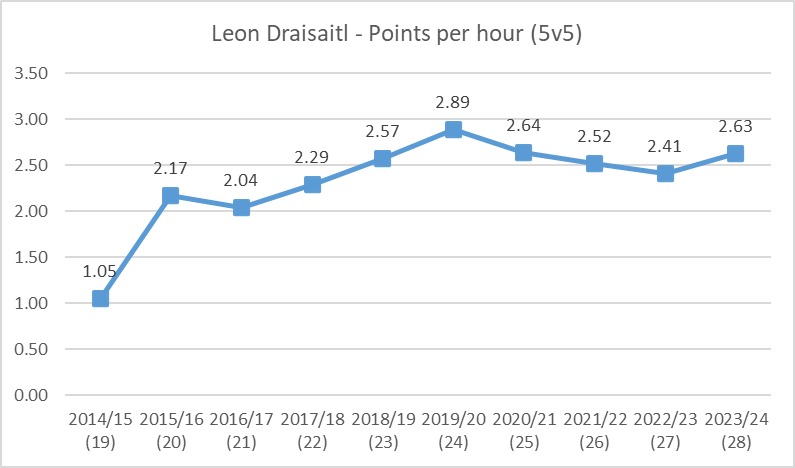
Back to Draisaitl. Looking further into his individual numbers, we see that he’s still producing at an elite level. His points per hour of 2.63 last season was one of the highest in his career. The question heading into next season is if this was an outlier. He was producing at an excellent rate the previous three seasons, but his rates were gradually declining.
What also stood out from last season was his personal shooting percentage, which continued to gradually decline. Again, he’s still an elite player, and there’s no pressing issues. But it’s something worth monitoring and addressing if things continue this way. And if it does continue, he likely won’t be able to mask his on-ice defensive deficiencies with his production. Just something to keep in mind as he ages.
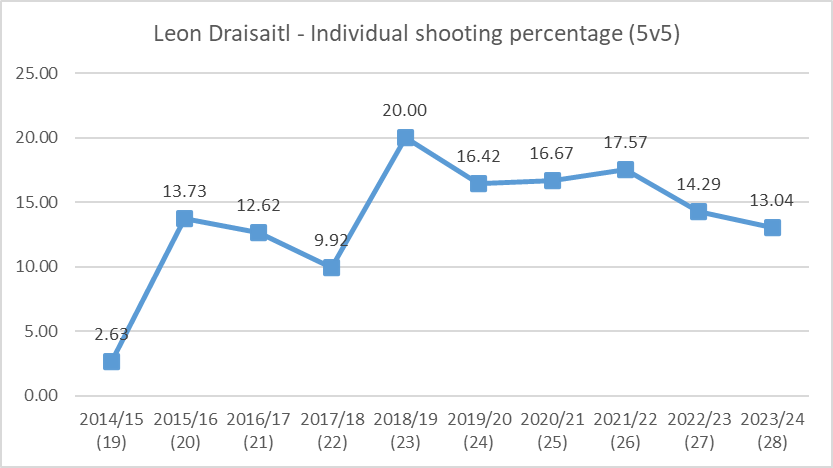
Data: Natural Stat Trick
Related:
- Leon Draisaitl’s new contract is pricey but well deserved – Oilers Nation (2024, September 4)
- Leon Draisaitl , the salary cap and paying your superstars – Adam’s Sports Stuff (2024, September 3)
 The SuperFan