Cleveland’s response to Lebron James

After announcing his decision to leave Cleveland for the Miami Heat, Lebron James faced a considerable amount of backlash. By announcing his decision in a one hour TV special, sitting down for a one-on-one interview, James irked not only Cleveland fans, but sports fans around the world.

Traditionally, when a player decides on where he/she wants to play, it’s a press conference setting, hosted by the team acquiring the player. The player and managers face the cameras and speak directly to the audience via television, radio or webstream. James went a whole other route and admitted afterwards he would have done things a lot differently if he had to do it again.

Here’s the latest ad by Nike featuring James.

So now James speaks directly to the camera, eye to eye, and asks ‘What should I do?”. He goes on to talk about his decision and what ramifications it could have. He spins the backlash from his decision into a motivator to persevere as a professional athlete. Typical sports ads deliver their message through actions. For example, an athlete would dunk a basketball or a hit a home run. A dialogue with the audience such as this ad is rarely used.
Grant McCraken’s comments about the ad and the individualism expressed by James and Nike are worth a read.

Cleveland filmmaker Dan Wantz recently released this response to the Nike ad featuring James, attached below. The video takes the Nike ad and splices in fan responses to what James should do.

Telling NewsChannel5, Wantz commented:

“I felt like Cleveland didn’t really have a voice in the matter. I saw a need for Cleveland to have a voice. I feel like this video was a good representation of how Cleveland feels.”

This comment is interesting because fans do have a voice. Message boards, blogs, Twitter and Facebook are all methods to give fans a voice and were used to support/jeer James’ decision. But it’s this video which matched the professional, polished look of the original Nike ad that really drew viewers on Youtube. It used footage from the original ad, clips from the decision and other highlights to really express a communities feelings. By wrapping all the feelings of Cleveland fans in a short clip, a summary is provided to fire right back at Nike and James. I found this to be much more powerful method to express feelings than social media tools.

***UPDATE***

Had to add this one. Just came out. MJ claims to have nothing to do with it though.
Power of the professional sports fan

Came across an article recently that really made me think about pro-sports and fans. It’s by Gladwell of the New Yorker and can be found here. Gladwell talks about how professional football has a lot of characteristics similar to dog fighting. This was written around the time Michael Vick was sent to jail for running a dog fighting operation.

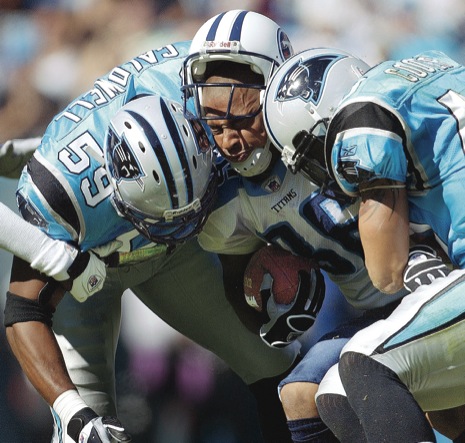
Really it’s a kids game, but these athletes are under tremendous pressure. Expectations are from everywhere: teammates, club owners, families, sponsors and fans.

Teammates expect your best effort every game and every play. Contracts are paid before they even play a game, raising the owners’ expectations. Families rely on the pay cheque to cover child care, mortgages and bills. Sponsors expect a high level of professionalism, as athletes represent the brand.

And of course, the fan.

It’s a gate driven business. The people in the stands, people tuning in and those buying merchandise have invested in the pro-athletes financially and emotionally. They’re there to be entertained and to be engaged. They want the best. Failure to do so means the fan spends less or finds other options.

Athletes don’t just represent their team. They represent a city, a country or even a religion. If the team loses, the community loses.

The athlete themselves know that their careers can end at any time. They work their entire lives to get there but it can be taken away pretty quickly. There are younger players coming through the ranks every day, ready to take their jobs and pay cheque. Competition gets fierce because realistically, there are only a few spots out there in the professional ranks.

No matter how hard they get hit or how bad they get hurt, they are expected to get up and keep playing. The long term ramifications of continuous shots to the head or the beating their bodies take are still under review. But it’s safe to assume the majority of pro-athletes won’t be feeling too great in their old age.

The cause of this is pretty spread out across different factors, and of course depends on the situation. But the influence of fans on pro athletes and sports is extremely high, and could be growing because of social media.

Bloggers analyzing 1972 Summit Series

The 1972 Summit Series between Canada and Russia will forever be remembered as one of the greatest events in hockey history. The Canadians stacked with the top NHL players were expected to roll over the unknown Russian squad. Instead, they needed a final game to decide the winner. Legends were made for sure, with one of the most memorable goals of all time being scored to win it for Canada.

You can read up on all of the history, players and storylines at Joe Pelletiers excellent website.

As a project, blogger Pat Maclean of Black Dog Hates Skunks is applying modern methods of hockey analysis to each game of the Summit Series. Not an easy task considering how old the footage is and the lack of instant replay. There’s not a lot of people out there to bounce ideas off of, no Youtube and not a whole lot of stats. He does an amazing job regardless and provides detailed analysis of players, events and the coaches decisions.

I’m also in the midst of reading Ken Dryden’s “Face off at the Summit”. Dryden played goal for Team Canada and kept a journal of his thoughts during the series. After losing game 1 against the Russians, Dryden (1973) writes:

I’m afraid that this series will be analyzed and analyzed ad nauseam. People in the street. Cab drivers. Bellboys. Waiters. Writers. Coaches. League presidents. Prime ministers. Everyone. They all have a theory. They all picture themselves as a coach or a player, and they become theoretical and hypothetical. It’s so much bull, believe me. They’re all sitting there and playing verbal games to make themselves sound important. We have to play the real games. We know what we have to do. Or do we? (p. 64)

Fan analysis has always been around. It’s just with more people online, and more tools readily available for fans to contribute, the analysis has increased significantly. The community online is stronger and the amount of information available continues to grow. Gotta wonder what Dryden thinks of today’s fans compared to those in 1972.

Dryden, K. (1973). Face-off at the summit. Toronto: Little Brown.