Social Networks

Using and Managing Communication Networks (Second Spring Institute)

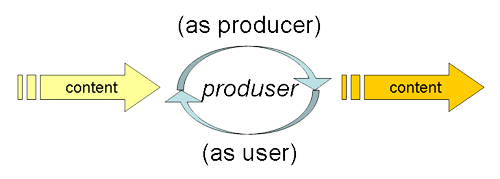
Produsage

Axel Bruns concept of “produsage”. Key concepts.

1. Open Participation, Communal Evaluation

2. Fluid Heterarchy, Ad Hoc Meritocracy

3. Unfinished Artefacts, Continuing Process

4. Common Property, Individual Rewards
Social Capital

Social capital, which is the “capital captured through social relations” (Lin, 19) plays an integral role for communities of practice to achieve its knowledge management goals. This social capital is developed by building and maintaining social ties to those within the group and those outside of the group. The amount of social capital an individual has can greatly benefit the community of practice they are in. According to Nan Lin, “capital is seen as a social asset by virtue of actors’ connections and access to resources in the network or group of which they are members” (Lin, 19). Members of the COP each have relationships with one another that they can transfer knowledge between. They also have contacts that are outside of the community that can be vital for the knowledge development amongst the group.

Lin, N. (2002). Social capital: A theory of social structure and action. New York: Cambridge University Press.

Group Transactions

Group Transactions (1st Spring Institute, 2009)
COMM 503

Clay Shirky, in his book “Here Comes Everybody” has a lot of interesting things to say about social media and the impact it has had on groups.

“…most of the barriers to group actions have collapsed, and without those barriers, we are free to explore new ways of getting together and getting things done.” (p. 22)

Yochai Benkler’s concept of networked information economy:

…system of production, distribution, and consumption of information goods characterized by decentralized individual action carried out through widely distributed, nonmarket means that do not depend on market strategies.

Participatory culture – regular citizens have ability to not only consume but also contributors and producers. Jenkins et al (2006) describe participatory culture as one:

1. With relatively low barriers to artistic expression and civic engagement
2. With strong support for creating and sharing one’s creations with others
3. With some type of informal mentorship whereby what is known by the most experienced is passed along to novices
4. Where members believe that their contributions matter
5. Where members feel some degree of social connection with one another (at the least they care what other people think about what they have created)

Source: Wikipedia

Dr. Gordon Gow set up a course blog in 2010: http://mactcomm503.blogspot.com

Benkler, Y. (2006). The wealth of networks: How social production transforms markets and freedom. London: Yale University Press.

Jenkins, H, Puroshotma, R., Clinton, K., Weigel, M., & Robison, A.J. (2005). Confronting the Challenges of Participatory Culture: Media Education for the 21st Century, available at http://www.newmedialiteracies.org/files/working/NMLWhitePaper.pdf.

Shirky, C. (2008). Here Comes Everybody. New York: Penguin Press.

McLuhan

“We become what we behold. We shape our tools and then our tools shape us.”

 – Dr. Herbert Marshall McLuhan (July 21, 1911 – December 31, 1980)